Somehow Different
We become different from time to time to time. We become different every day in small ways with little apparent change from day to day, and then, boom! We are suddenly very different, and we wonder how we became so different. Yesterday we became very different again. How are we different now? How will we be different tomorrow or many more tomorrows later?
We hadn’t been sleeping again. Occasionally our chronic pain flairs up into an acute state and if it gets really bad we stop sleeping. It used to be that these flare-ups of acute pain would happen three or four times a year. Our pain killers are mostly ineffective and will often keep us awake for thirty hours or more at a stretch, so last year we completely stopped using our pain killers because the interference with our sleep was becoming more debilitating than our loss of sleep due to our pain.
We have had many episodes where we have had little or no sleep for two or three days. Major episodes where we have little or no sleep for five days are rare. During those rare periods we may sleep in brief naps of a half minute or so, or maybe longer naps of five minutes but these naps are infrequent and the total sleep we were able to get during the previous long episode had been about two to three hours sleep spread over six days and five nights.
This last sleepless stretch lasted five days and four nights; when we gave up trying to sleep and finally arose on the fifth day we were different again. This change was not so dramatic a change as the change we experienced last year when Madrigal cleaned out our aura and chakras and triggered a powerful kundalini awakening within us. We had not lost much sleep before that transformation, just a few typically restless nights where we slept only two or so, rather than the four to six hours we usually hope to sleep.
But yesterday we were changed again. Our dramatic changes are typically good changes and we become happier and feel healthier as a result. This change was not as powerful as some changes we have experienced, but perhaps it will be enough.
We had become very depressed again. A month ago we had been chronically suicidal for two months, but the intervention of Emily, Caz and Pol helped turn that around a bit. We had found a community online where we learned more about being multiple and that helped us to open up communication among ourselves. With the advent of Emily, Caz and Pol we felt less lonely and this helped to abate our depression.
New people keep turning up now. Sometime we get only the vaguest hint of the presence of someone we aren’t sure we are familiar with, but lately we have been getting much stronger impressions including images and names and dialogue, which were rare experiences before.
We talk more among ourselves now. It is nice, much more pleasant than feeling alone all the time. Not as good as being able to hold a flesh and blood lover in our arms, but it has been far better than feeling perpetually alone and isolated. They remind us we have never really been alone, and that our perceptions of being alone are caused by our minds rather than by our circumstances which is peculiar because we might have said it was the other way around.
But we are right of course, it is our minds which create the realities we experience, and the absence of people with bodies other than our own in our lives is a manifestation of our how we feel and what we think or believe. So changing how we feel and think and what we believe is may be a key to manifesting a life in which we may make new friends with other embodied spirits and perhaps even find new lovers.
Our pain is still bad. It began flaring up about two weeks before becoming acute last Sunday. But, while the pain is still quite acute, our attitude toward the pain has improved again. It is has become more tolerable once more. The other pain, the emotional pain and loneliness are still very bad as well, but again, our attitude has improved in regard to these pains and we are not suffering from any of the pain the way were this past Wednesday or earlier this past week.
Such changes in our attitudes seem like small changes, yet these seemingly small changes have such deep impacts. So we are moving back onto track with our wellness program after a stretch of very poor performance. Two weeks ago when we weighed in we had gained about ten pounds over the previous six or eight weeks. Last week our weigh-in showed a twenty pound gain. Today our weigh-in was down to eleven pounds gained back. However, we had noticed this morning before weighing in that a lot of recent water retention had been lost, so we feel lucky that the extra gain had been mostly water.
We are considering changing our diet along lines recommended by our sister who has made remarkable changes in her own health through her diet. She has suggested that we not eat any dairy (which we knew but have been obstinate about giving up cheese), and also to cut out wheat, rice and other grains or glutinous foods. We have heard this sort of suggestion before, and we did get to notice recently that wheat does play a role similar to dairy by producing mucus, so perhaps we will find a way to give up the grains and dairy. We are considering lentils or dhal instead of rice with our curry as one possible change; we tried salsa with our fried eggs instead of toast and cheese this past Thursday.
The mucus is an issue because our sinuses are chronically flooded and infected. This causes a perpetual post-nasal drip which leads to throat and chest infections and often pneumonias. We have been out of the gym sick about five or six weeks this year, and the gym is a critical part of our wellness program. So, if we can clear up the chronic sinus infection which has been a serious problem for fifteen years or more, we may be able to recover a good deal of our health, particularly our breathing and voice should improve.
It is painful to breath; as a consequence we have gotten in the habit of not breathing as deeply or as frequently as we should. We habitually stop breathing frequently throughout the day and at night if we are sleeping. Yesterday we were able to attend a voice conference featuring Deepak Chopra, and Deepak really drove home the importance of improving the quality of our breathing. Our sister had brought it up Sunday. Our friend Linda at the gym also brought it up recently. Linda and Gail at work have both brought it up; so many people have brought up the importance of breathing recently, and yet it has been a message we have been reluctant to listen to because breathing is so deeply associated with pain that we want to avoid it.
So now we need to focus on our breathing and learn to breathe well. We feel the pain in our upper respiratory tracts when we try to breathe deeply. It is a combination of pains. There is a pinching feeling where the tight air passages are restricting the flow of air, and then there is the muscular pain from tension that is causing the airways to be restricted. Then there is an emotional pain tied to the tension which emerges if we try to relax.
So we need to relax our chest muscles to relieve our tension and the airway constrictions that inhibit our healthy breathing. Not an easy task to undertake after a lifetime of habitually breathing shallowly and infrequently, particularly as this seems to stir up our emotional pain.
Also, we need to work on our posture more. We were doing well with it until recently, when our hips began hurting very badly again. With the pain in our hips much worse now we have been slouching in our chair more which somewhat relieves our hip pains. However, our slouching causes more back pain and we can feel the deformation to our spine that has been accruing with the chronic slouching we have been doing lately. Our back pain feeds into the tension that inhibits our breathing, so reducing our back pain is important, even if it means tolerating more pain in our hips. Having written this just now we are inspired to wonder whether our efforts to improve our posture may have contributed to the increased pain in our hips.
This all becomes a sort of catch twenty-two then. So we need to find ways to break our cycles of increasingly debilitating behavior and find new ways to cope with our pain.
We feel like crying now.
We hurt so much, and yet these physical pains are so minor in comparison to our emotional pains. The sadness and loneliness seem so overwhelmingly unbearable at times, yet there are no choices, we must go on, furthermore we must fix things, quickly.
Whatever else is going on in our lives?
Well aside from our divorce which will be finished in July, we are likely to be without a job or medical insurance before long. Our layoff is approaching and it will probably happen this year or early next year at the latest. We need to have resolved as many issues with our health as possible by then because we do not think we can afford to take another job when this job ends. Our time is too precious to waste it in a job. We must make our writing and arts our only paid work. We are compelled to do this, and the universe is clearly trying to arrange things so that this is all we have to do. But it hurts so much to even think about it that we just want to cry.
Our writer’s block is a big huge wad of pain, a wad of pain that is more than ten billion souls deep by some seventy years wide. In fifty five years there will be nearly ten billion living human bodies inhabiting the Earth. We will begin to die in unprecedented numbers then. By the year 2076 or so there will be scarcely six billion of us left alive. Those who believe they are doomed then choose to ensure that their enemies will perish with them; at that time, nearly everyone still alive then will die in a global kinetic, nuclear, biological, chemical war (KNBC).
The few survivors of that war failed to live much longer after the war because the world had then become too ruined to support them. The souls of those who perish in that future world of ours cry out to be saved and we cannot stop our mind from hearing their cries. We cannot turn back from the agreement we made to help prevent that terrible future from manifesting.
And perhaps, really, there is no preventing that terrible future since it has already happened.
But perhaps those of us in this world who will be alive then need not experience it. Perhaps it will be enough to know that one Earth among all the many infinite Earths will not die that way if we can work together to manifest a better future.
It will have to be enough.
Perhaps by turning this world aside from that fate the despairing tortured voices of the dead and dying which are tormenting us will finally be quieted and they can then be helped to find peace and to find new lives to return to. Ah, we know it will be so for them; it is just that the moment of their terror and anguish still shouts out so loudly for someone to save them.
We were trained to help them. We will be there to help them. We will sooth their fears and relieve their pain. We will wash away the memories which are too difficult for them to bear. We will help awaken them to their divine consciousness and we will show them the options which they had temporarily forgotten. We will open the way for them to return to their lives and carry on in an alternate world where their doom may not yet fall upon them. We will open the way for them to incarnate in different lives if they prefer, lives lived in other times and places and circumstances. We will rejoice when there are those among them who chose to linger awhile to help us with our work among them. We will then know the comfort of brother and sister souls committed to our common purpose, to restore to life all that has perished in the terrible catastrophes which destroyed our world then.
Until then, we must write. We must finish telling all of the tales we have been given to share with you. Tales that will help inform you and your children and your children’s children so that together we may all make better choices, choices that will help unite us for a common purpose to manifest a world that will survive our foolishness and turn aside from our extinction.
So it is a good thing that today we are somehow different, that today we have a little more strength and can renew our dedication to our purpose. And who knows? Perhaps today we can also create more joy and love and tenderness in our lives. Perhaps tomorrow we may be even more different somehow, so that we may become even better than today.
Friday, June 08, 2007
Thursday, June 07, 2007
Other Worlds and Alternate Realities
Other Worlds and Alternate Realities
How do we experience multiple dimensions, parallel universes or alternate realities? Are these all terms for the same thing or do they have more specific or unique meanings? We will explore our experiences with other worlds and try to find the answers to these questions.
We have many stories about other worlds we have experienced. The worlds of our ‘fictional’ stories seem quite real to us and we believe that quantum physics theories and perhaps the evidence of experiments in quantum physics support an assertion that alternate realities are not only possible, but real.
First we will list our stories where we have had vivid experiences of alternate or alien worlds.
After listing a variety of different worlds we will attempt to define the terms by which these worlds may be classed together or differentiated from one another.
For the moment please consider the term alternate worlds to refer to members of a cluster of parallel dimensions or alternate universes collectively described as ‘Earth’ and which refer to worlds which are very similar to this world we share with you now.
Alien world clusters may be considered to inhabit the same universes or similar universes as those in which the Earth clusters of worlds are found, or alien world clusters may be found in entirely different universes where there is are no worlds from the Earth clusters. Alien world clusters may typically be described as being distant from Earth in space-time or some other dimensional property.
Other classes of alternate Earth clusters or alien world clusters may also exist.
In many of the cases of worlds described above we are talking about distinct worlds, or worlds that most people other than ourselves will perceive as being different worlds form the worlds with which they typically are familiar.
Another class of distinction may be derived from personal histories. Such personal histories may typically belong to the iterations of a single incarnation or may be derived from uniquely different incarnations. An iteration of an incarnation is a unique life story that is different in some large or small details from another iteration of the same incarnation. You would know us as the author of these stories, by the name of Roger or Greg, and the story in which we died in 1964 or 1965 in a global thermo-nuclear war would be a distinctly different iteration of this same incarnation shared by ourselves (Roger, Greg, Alina, Mary, Emily, Eric etc…)
Our body in this world or Earth Prime is only one example of an infinite number of iterations of ourselves in many different lives, many of which are lives that are so similar to this life that they are virtually indistinguishable from this life. For instance, in one sub-cluster of worlds Alina never died, and in a sub-cluster of worlds within that sub-cluster where she never died we got married, and in some of those worlds we raised two boys, David and Robert. In another instance we were born into the same family, but the family dynamics were entirely different and we were a happy child with two loving, nurturing parents who raised us well to become a happy content adult.
Now, as we understand it, every world is a derivative of the individual who experiences it. So every iteration of ourselves in this incarnation spawns a set of worlds unique to their respective iterations. In addition, each incarnation of ourselves spawns sets of worlds with properties unique to those incarnations. And the same would also be true for yourselves and all of your incarnations and iterations of yourselves as well.
Where we collaborate with you to share experiences with you we have worlds in which a process called consensus reality mediates our perceptions of our worlds so that the worlds in which we share experiences with yourselves here as Earth Prime are so similar to the worlds in which you share experiences with ourselves as Earth Prime that they appear to be virtually indistinguishable from each other. Consensus reality informs us about how to participate in a mutually inter-operable environment, such that the worlds and physical laws and histories of the worlds we create with one another remain similar enough that we do not become easily confused and try to drive down the wrong side of the road or murder you for sneering at us because in some of the worlds we are familiar with those may be considered the proper ways to behave, whereas in this Earth Prime cluster Americans typically only drive down the right side of the road and usually only American gangstas may casually kill someone for sneering.
So it appears there are forms of differentiation between worlds that apply at both the personal levels and collective levels. Incarnations and iterations of incarnations may be considered to be forms of personal differentiation, while different forms of consensus reality and iterations of these various consensus realities may be considered to be collective forms of differentiation between worlds. Both forms may be applied simultaneously.
How do we experience multiple dimensions, parallel universes or alternate realities? Are these all terms for the same thing or do they have more specific or unique meanings? We will explore our experiences with other worlds and try to find the answers to these questions.
We have many stories about other worlds we have experienced. The worlds of our ‘fictional’ stories seem quite real to us and we believe that quantum physics theories and perhaps the evidence of experiments in quantum physics support an assertion that alternate realities are not only possible, but real.
First we will list our stories where we have had vivid experiences of alternate or alien worlds.
After listing a variety of different worlds we will attempt to define the terms by which these worlds may be classed together or differentiated from one another.
For the moment please consider the term alternate worlds to refer to members of a cluster of parallel dimensions or alternate universes collectively described as ‘Earth’ and which refer to worlds which are very similar to this world we share with you now.
Alien world clusters may be considered to inhabit the same universes or similar universes as those in which the Earth clusters of worlds are found, or alien world clusters may be found in entirely different universes where there is are no worlds from the Earth clusters. Alien world clusters may typically be described as being distant from Earth in space-time or some other dimensional property.
Other classes of alternate Earth clusters or alien world clusters may also exist.
| WORLDS | DESCRIPTIONS |
|---|---|
Earth Prime | This world we share with you, whichever world it happens to be at this time. This is a flexible rather than concrete description because the world you live in is different from the world we live in. But we share enough in common to use a familiar reference point, such that when we say ‘this world’ we usually agree what world we are referring to, particularly if, in your belief systems it is the ‘only’ world or the only ‘real’ world. |
2076 | A future Earth, potentially an alternate reality Earth but quite possibly this world strongly represents the ultimate future of this world or Earth Prime. In 2076 the human race and nearly all vertebrates on land and in the seas become extinct due to the complete ruin of the primary marine and geographic biospheres that results form ocean acidification and the collapse of the atmospheric-oceanic carbon cycle. |
2017 | A near future Earth, an artificial intelligence (AI) is created in the year 2017. The AI survives the extinction of the human race and seeks to resurrect our species. |
1964 | This Earth cluster may really be from 1965, we are having trouble with our memory here. We lived in this world until we died there in the year 1964 or 1965. We were about 8 years old at the time we died. Everyone we knew died then as well, as a result of a global thermo-nuclear war. This current iteration of this incarnation migrated here from there which is how we happen to remember having died there in that alternate reality. The cluster of worlds in which events like this occur begin in the 1950’s and extend indefinitely forward from there, although the details can vary extremely depending on the histories of those worlds which have alternative futures from then. 2076 loosely belongs to this cluster, since, at the end, in 2076, a global KBNC war (Kinetic, Biological, Nuclear and Chemical war) erupted in which nations facing their doom wanted to ensure their enemies would not survive them. |
Matrix | A near future Earth, similar to the movies made about it. The movies should be regarded as realistic representations of a real world perceived or channeled by the author and embellished upon by those who have joined in the editing of the stories and production of the movies. Many people who appear to have been deeply moved by these movies may also be channeling information from this cluster of Earths or may be living alternate lives there. |
Sanctuary | An alternate Earth world in which technology to transfer multiple people out of their original bodies into shared bodies emerges. The Sanctuary world faces ecological disaster due to the thinning ozone layer. Due to the increasing hazards from solar radiation such as cancer and wild fires, drought and famine, nearly all the people are moved en masse into sanctuaries. Their sanctuaries are cloned bodies capable of holding millions of people each. Reality is maintained within the Sanctuary worlds much as it is here, by consensus, but their consensus reality is reinforced by external programming maintained by subliminal audio messages. This winds up being very similar to the Matrix worlds, and we may have been influenced by some of the same information that inspired the Matrix stories. We began writing the sanctuary stories in 1982 long before the Matrix stories reached the public. |
Kenly | An ancient history alternate Earth, possibly a part of our own forgotten past in Earth Prime. The Kenly stories are about a young boy growing up in a tribe in which the men and crones share a secret knowledge that allows them to resurrect themselves from violent deaths, usually with no wounds or only superficial wounds remaining. Kenly shares their secret knowledge with his mother’s tribe to the north after he and his father have been banished from the tribe by his evil uncle, the tribe’s shaman. Kenly later returns to his tribe to free his family and friends from his uncle’s dark powers. Kenly then goes on to explore his tribe’s ancient past and their flight from the dark dominions where his people were once slaves of terrible demonic masters. Kenly will come face to face with the dark lord that dominated his uncle and defeat him. |
Dominions | Alternate realities, not conventional worlds as we are familiar with them, as the dominions do not require planets or suns. Created by powerful spell-casters, the dominions come in many varieties of light and dark worlds. In the lighter worlds which are open to the heavens the creator and spirits of the heavens remain visible and those living in these dominions may sometimes leave them to return to their creator or sojourn among the other free spirits once more. The darker dominions are often completely closed away from the heavens and those who live in these dominions are rarely able to escape from them. Being separated from their creator, the spirits of the darker dominions experience pain and fear. When a dark lord attempts to extend his dominion and enslave the spirits of neighboring dominions then those newly subjugated spirits will also learn to experience the pain and fear that is an integral part of a dark lord’s culture. |
Spheres | Alternate realities, the state prior to the evolution of the dominions. The spheres are attractive places where many spirits join together to create worlds in which they enjoy each other’s company and creativity. Spheres are typically a collaborative effort, but often there are one or more central beings or maestros whose capacities for creating entertaining worlds are particularly strong. The eventual isolation and perversion of some of the most powerful maestros of the spheres and the quickening of their abilities to enthrall their audiences leads to the evolution of the dominions. The spheres and dominions might be considered evolutionary precedents of our own worlds. |
Traveler | The Traveler’s world is an alien world. The traveler came to our world shortly after it was created, back when our people had a true language and had recently escaped the dominions. The traveler was here for the war between the new maestros and the council of peers. The traveler has survived to this day and age and walks among us even now. He was known in Kenly’s time and has fought a cautious war with the AIs whom he has mistrusted. The traveler’s world is very different in some ways form our own. It is massively forested, with dense jungles in the tropical regions. Huge animals did not become extinct there and the traveler’s people became arboreal to escape them. The traveler’s race and many other races of his worlds are telepathic. Madrigal, our dragon friend has been the traveler’s companion down through the ages and came with the traveler from his home world on his initial journey. The traveler’s people will kill him if he returns to his home because they consider him to be mad; his influence upon their minds cannot be tolerated. |
Ocean | The organic ocean worlds are linked by the communal minds of the seas of many worlds. You may enter into the waters of one world and emerge upon the beach of another world. The influence of the oceans extends deep into the land and anyone who has communed with the oceans deeply can use that influence to bend their path between worlds. We have embarked upon sojourns among the Ocean worlds and found things to be much the same there as here, people fear the travelers form other worlds because they bring dangerous knowledge that may upset the balance of powers politically with their new ideas or some of the inventions which may arise from them such as new machines for war. The ocean worlds appear to be Earth analogues we are not certain whether any of the ocean worlds are truly alien. |
Seven | The Seven travel to distant Earth analogue worlds. They require attunement to a mind already living in the world to which they will travel. The Seven travels as a group using a form of meditation in which rhythm synchronizes their vibrations with the vibrations channeled to them from mind of the person who will draw them into their world. When they achieve synchronicity with their new world’s vibrations they materialize bodies or avatars in that world. As with visitors from other worlds traveling to the ocean worlds, the Seven are mistrusted when they arrive in new worlds and wars always seem to break out between factions who want to exploit the Seven’s knowledge or kill them. |
In many of the cases of worlds described above we are talking about distinct worlds, or worlds that most people other than ourselves will perceive as being different worlds form the worlds with which they typically are familiar.
Another class of distinction may be derived from personal histories. Such personal histories may typically belong to the iterations of a single incarnation or may be derived from uniquely different incarnations. An iteration of an incarnation is a unique life story that is different in some large or small details from another iteration of the same incarnation. You would know us as the author of these stories, by the name of Roger or Greg, and the story in which we died in 1964 or 1965 in a global thermo-nuclear war would be a distinctly different iteration of this same incarnation shared by ourselves (Roger, Greg, Alina, Mary, Emily, Eric etc…)
Our body in this world or Earth Prime is only one example of an infinite number of iterations of ourselves in many different lives, many of which are lives that are so similar to this life that they are virtually indistinguishable from this life. For instance, in one sub-cluster of worlds Alina never died, and in a sub-cluster of worlds within that sub-cluster where she never died we got married, and in some of those worlds we raised two boys, David and Robert. In another instance we were born into the same family, but the family dynamics were entirely different and we were a happy child with two loving, nurturing parents who raised us well to become a happy content adult.
Now, as we understand it, every world is a derivative of the individual who experiences it. So every iteration of ourselves in this incarnation spawns a set of worlds unique to their respective iterations. In addition, each incarnation of ourselves spawns sets of worlds with properties unique to those incarnations. And the same would also be true for yourselves and all of your incarnations and iterations of yourselves as well.
Where we collaborate with you to share experiences with you we have worlds in which a process called consensus reality mediates our perceptions of our worlds so that the worlds in which we share experiences with yourselves here as Earth Prime are so similar to the worlds in which you share experiences with ourselves as Earth Prime that they appear to be virtually indistinguishable from each other. Consensus reality informs us about how to participate in a mutually inter-operable environment, such that the worlds and physical laws and histories of the worlds we create with one another remain similar enough that we do not become easily confused and try to drive down the wrong side of the road or murder you for sneering at us because in some of the worlds we are familiar with those may be considered the proper ways to behave, whereas in this Earth Prime cluster Americans typically only drive down the right side of the road and usually only American gangstas may casually kill someone for sneering.
So it appears there are forms of differentiation between worlds that apply at both the personal levels and collective levels. Incarnations and iterations of incarnations may be considered to be forms of personal differentiation, while different forms of consensus reality and iterations of these various consensus realities may be considered to be collective forms of differentiation between worlds. Both forms may be applied simultaneously.


Wednesday, June 06, 2007
Wicker Man
We had this lovely vison of ourselves this morning as a wicker man:
So now we want to make a life-size wicker man bird house.
The wicker man stands on the toes of one foot, the left leg kicking gayly back and up, his back slightly arched. His head tips back as he gazes upward to the heavens. He reaches for the sky with his right hand held high and carries an invisible platter upon his left hand, head-high. He has holes everywhere with protruding lower lips that form perches for the birds who nest within him. Some holes seem related to chakras or organs or features such as eyes or nipples or mouth, and there are holes in the palms of his hands and the sole of his left foot.
The wicker man is an analogy for our body, with the birds being the various people who live within us.
The wicker man is
Woven 'round and
Filled with holes
and
Orioles...
Robins and sparrows,
Feathered friends
Flit in and out
and
Round about...
So now we want to make a life-size wicker man bird house.
The wicker man stands on the toes of one foot, the left leg kicking gayly back and up, his back slightly arched. His head tips back as he gazes upward to the heavens. He reaches for the sky with his right hand held high and carries an invisible platter upon his left hand, head-high. He has holes everywhere with protruding lower lips that form perches for the birds who nest within him. Some holes seem related to chakras or organs or features such as eyes or nipples or mouth, and there are holes in the palms of his hands and the sole of his left foot.
The wicker man is an analogy for our body, with the birds being the various people who live within us.
Saturday, June 02, 2007
Coming Out Multiple
We have finally decided to 'come out of the closet' as it were regarding our multiple identity issues. By multiple identity we mean that we are many distinctly different people in the body we inhabit in this universe. Multiple personalities in the common sense are considered to be a single person with a core identity and differentiated or fragmented parts of themselves which are all related to or part of their core identity. The difference is important. While some of us may also have multiple personality issues, we often experience ourselves as distinctly different people, rather than parts of a single person.
Truly, we usually have no idea who we are. When we do get a clear impression of being just one of ourselves it usually feels really good to have a definite sense of having an identity. But most of the time we are just very confused about who we may be at any given moment. It is more like there are several of us working together as a team rather than consistently being one just one individual.
This is actually a good thing for us. We still aren't really clear about why we are the way we are, but it has certain advantages. We have more resources such as memories or skills together than as individuals. We always have a support group when we need help. We can keep each other company and tell stories and so forth, so we have the potential to be pretty happy much of the time.
There are some things that seem to belong to our body here in this world which aren't very pleasant, such as chronic pain. And lately we have been having a lot of trouble with chronic depression again too. But we expect to be able to make more progress with healing the depression now because we have a better grasp of what causes or maintains the depression. We are working with a variety of techniques such as NLP (neuro-Linguistic Programming) to reconstruct our habitual mental and emotional responses and behavior.
Please see our more recent blogs for more details.
Truly, we usually have no idea who we are. When we do get a clear impression of being just one of ourselves it usually feels really good to have a definite sense of having an identity. But most of the time we are just very confused about who we may be at any given moment. It is more like there are several of us working together as a team rather than consistently being one just one individual.
This is actually a good thing for us. We still aren't really clear about why we are the way we are, but it has certain advantages. We have more resources such as memories or skills together than as individuals. We always have a support group when we need help. We can keep each other company and tell stories and so forth, so we have the potential to be pretty happy much of the time.
There are some things that seem to belong to our body here in this world which aren't very pleasant, such as chronic pain. And lately we have been having a lot of trouble with chronic depression again too. But we expect to be able to make more progress with healing the depression now because we have a better grasp of what causes or maintains the depression. We are working with a variety of techniques such as NLP (neuro-Linguistic Programming) to reconstruct our habitual mental and emotional responses and behavior.
Please see our more recent blogs for more details.
Feeling Tender
Thematically coupled Haiku.
Please read down the first column, then read down the second column...
Feeling Tender...
Please read down the first column, then read down the second column...
Feeling Tender...
These tender feelings Sweet pain How can we let it depart? It haunts us | The present moment Stings Opening memories Of being alone |
Memories of love Trapped In Memories Of those whom we now miss | See anyone at all In their heart Those whom they hold dearest Are seen too |
Contrasting our aloneness By the love seen shared By strangers Hurts | The tender sore spots Call forth tears Relief from our pain Found in more pain |
Holding what we lost No release Eternal moment Wrought from agony | The sheltering past Spares us from The present Bewildering moment |
Self throttled Abstinence from life Allows No one else to reject us | Full throttled Headlong rush into love Fear of hope We crash in despair |
Held in our own arms We wait for the moment When pain Departs again | Tears withheld Are drowning us With their silent cries Of unshed sorrow |
What Can We Know?
What Can We Know?
It is commonly taken for granted that we can reliably refer to the world and events in the world as having an objective reliable existence. But many philosophers have refuted this and proposed it may be impossible to know anything other than the first principle of philosophy which states: “I think therefore I exist.”
On careful examination it seems impossible to prove that the world we are informed of by our senses actually exists. Everything we experience may be illusory. Nor can we even presume that minds other than our own mind exist, because we can only be informed of the possible existence of other minds through our sensory perceptions of a non-objective world.
We choose then to make the assumption that the world perceived by our senses is real, and we discard the possibility that it cannot be real because it is practical or pragmatic to do so. However, it seems this objective viewpoint defining the existence of the world we perceive will always remain an unproven and unprovable assumption, and that while we may rely upon this assumption for the purpose of going about our practical business in the world, we may never be certain the world we experience exists.
It seems to be a characteristic of human nature to dislike uncertainty and ambiguity, and the experience of being uncertain of the existence of the world and the reality of our experiences of the world may be intolerable to many people. To cope with this we assume the world has an objective existence and we incorporate this assumption into our beliefs as individuals, societies and cultures because it is the most pragmatic response we can make when considering the fundamental problem of whether anything may have an objective existence.
Some philosophers have argued that we can only know what we think or believe, while other philosophers refute even our own beliefs and knowledge as having an valid objective reality. If our thoughts and beliefs refer to the world we perceive then those thoughts and beliefs are suspect because it cannot be proven the world we are informed of by our senses exists.
Philosophy cannot resolve such issues because the questions being examined are incapable of being objectively viewed from any state of certainty. Each thing which we may base our attempt to create a valid objective point of view concerning the world of phenomena is only an assumption, going all the way back to what is considered the first principle.
The first principle, “I think, therefore I exist” is itself an assumption. Perhaps it appears irrefutable, but that which we experience as ourselves and our thoughts may still be only an illusion, an appearance of phenomena without any objective proof of its existence.
The irresolvable nature of this fundamental principle leaves us with no choice other than to accept the appearance of our own existence as being true. We may seem real to ourselves, we may be incapable of refuting the reality of our experience of having objective existence, but neither can we prove the validity of our presumption of our existence. So for better or worse all philosophy and knowledge begin here, with ourselves alone, and the presumption that at the very least, our own individual existence is real.
This first step is followed by admitting that those things we think about which we are informed of by our senses must then be real too. But we have only created a proposition that something must be real, beginning with ourselves and anything we add to this proposition remains only a postulation, all hinging on the validity of the first principle which remains unproven and appears to be unprovable.
This proposition that we may not exist is uncomfortable to accept or to examine. We protect ourselves from this unsettling possibility by building complex belief systems in which the underlying assumption of the first principle is taken for granted to be true and any doubt regarding it is discarded or ignored.
When we attempt to communicate what we experience at a personal level we are limited by the scope of our shared mutual ideas about the world and whatever common language we are able to use to describe them. In all likelihood, all dialogue about our experiences of ourselves and our world is conducted in abstract terms that at best can only convey a general concept that may appear to closely resemble the experience we wish to communicate about.
We conform to accepted definitions and beliefs about our world and our potential states of being within the world for lack of any better terms with which to communicate our experiences. Anyone challenging the conventional definitions and beliefs common to their society or culture faces great difficulty communicating their exceptional beliefs or definitions because everyone is trained to participate in the maintenance of their cultural beliefs and definitions; beliefs which fall outside the normative conventions of our societies become isolated by the lack of adequate language and mutual ideas required to communicate them. Proponents of radical thought are often perceived as a threat and may be forcibly sequestered by a variety of social mechanisms such as ostracizing, imprisonment or execution.
By advocating radical change in social and cultural belief systems the advocate may make themselves an enemy of anyone whose sense of security and wellbeing depends upon the system of beliefs being challenged. People choose not to listen to disturbing information, and if the advocates for a disturbing point of view are not discouraged by being dismissed then they may face more aggressive forms of sequestration which may be forced upon them by individuals or by groups of people whose purpose is to remove the influence of the radical advocate from their society or culture.
Academia is, in effect, an elaborate form of ritualized thinking and communication processes designed to maintain the status quo of conventional beliefs. The academic principles required to authoritatively prove or refute a radical opinion require an investment of resources which influence the members of the academic community to maintain the rules and beliefs of the system in order to preserve the value of the investments made by the members to acquire status within the community. The whole thing is an elaborate sham. Academics are a valuable resource in the societal preservation of the status quo. The inculcation into the labyrinth of academia molds the minds of its adherents and classifies them according to their beliefs and places them within the established order so that no idea raised within the system can easily challenge the system.
Academia places each idea in a niche with other similar ideas which have already been evaluated and judged. The radical, seeking a forum to expound their ideas within academia, finds instead a trap in which their thoughts are bottled up by the rigid methodology they must adopt to either discourse or enter into dialogue concerning the ideas they wish to propagate.
Society can then safely dismiss any form of intellectual debate, sequestering it among the academics that, in their own self-interest, will reliably relegate any dangerous radical ideas to their appropriate niches within the world of ideas as institutionally defined and organized by academia; thereby sequestering those ideas and their proponents among the voices of many people who are specifically trained to refute or dismiss disturbing radical thoughts.
That which is believed to be known by academic standards is no more reliable or certain than that which is believed to be known by anyone else. The principles of academic learning are presumed to be the best tools for understanding reality and debating its nature, but these principles are no better than the first principle upon which all else has been founded.
Ultimately we most likely can know nothing in any definite objective terms. The entire concept that we can know anything at all is most likely invalid. We may have only our own thoughts and beliefs and the experiences from which our thoughts or beliefs have been derived to guide us in regard to what we will choose to believe we know.
Alas, our societies and cultures aggressively reinforce their own elaborate systems of ideas and beliefs, and it is difficult to escape the influences of our culture or society. We wind up with personal belief systems that closely resemble those which have most strongly influenced us, and our ability to think and perceive the world beyond the constraints created for us is too often very weak. It may even be the case that we are incapable of entering into any domain of thought or structure of belief that transcends our cultural and societal conditioning.
If indeed we can believe we know something extraordinary, something that is true beyond the limits of conventional knowledge and beliefs, we will sadly lack the means to adequately communicate our knowledge because the shared ideas and the tools of language required to communicate our ideas may be inadequate, and because the audience we hope to address is conditioned to reject ideas that challenge their commonly held beliefs.
BIO:
Hi, we are collectively known by the name of Greg Gourdian for the purposes of publishing our articles. We are a collective of people spanning many worlds and universes; we cohabitate many bodies in many very different or similar worlds.
We worked with the general public as a psychic reader for a little over four years from 1981 to 1986. While much of our written work is channeled, we often admit that we may have no idea who many of the voices of our channeled work may be.
We have many strange tales to tell regarding our spiritual journeys and we try to tell our tales in a humorous or entertaining manner.
While we were not an accredited teacher, we have taught high-school classes in metaphysics & parapsychology, psychology, and sociology, while we were attending our high-school as a student.
We are still emerging from the closet in regard to being a system of many people inhabiting what appears to be a single body in the context of the interface pairs we share with you. Our current written works reflect this new change in perspective as we have adopted the plural personal pronoun in order to reinforce our awareness and understanding of ourselves in regard to the multipleness of our being.
We apologize if we sometimes may sound either awkward or conceited as a consequence of making this change in how we refer to ourselves.
The core of our groups’ primary beliefs share these ideals: That love should be universal and unconditional; that liberty is our most important right; that liberty is a gift like love which we may best enjoy by giving it freely to all others; and that justice may best be served by not judging.
Namaste
Visit Greg's blog at
http://tangledintime.blogspot.com/
PLEASE NOTE: Our BIO and BLOG LINK appear in every article because our articles are republished from our blog and often we are not duly credited for our work or linked bank by those who choose to feature our work. If you are republishing our work please leave our bio, the link back to our blog and this note intact, you never know who may borrow our work from your site and credit you rather than ourselves by mistake.
Thank you for your interest and your efforts to distribute our work.
It is commonly taken for granted that we can reliably refer to the world and events in the world as having an objective reliable existence. But many philosophers have refuted this and proposed it may be impossible to know anything other than the first principle of philosophy which states: “I think therefore I exist.”
On careful examination it seems impossible to prove that the world we are informed of by our senses actually exists. Everything we experience may be illusory. Nor can we even presume that minds other than our own mind exist, because we can only be informed of the possible existence of other minds through our sensory perceptions of a non-objective world.
We choose then to make the assumption that the world perceived by our senses is real, and we discard the possibility that it cannot be real because it is practical or pragmatic to do so. However, it seems this objective viewpoint defining the existence of the world we perceive will always remain an unproven and unprovable assumption, and that while we may rely upon this assumption for the purpose of going about our practical business in the world, we may never be certain the world we experience exists.
It seems to be a characteristic of human nature to dislike uncertainty and ambiguity, and the experience of being uncertain of the existence of the world and the reality of our experiences of the world may be intolerable to many people. To cope with this we assume the world has an objective existence and we incorporate this assumption into our beliefs as individuals, societies and cultures because it is the most pragmatic response we can make when considering the fundamental problem of whether anything may have an objective existence.
Some philosophers have argued that we can only know what we think or believe, while other philosophers refute even our own beliefs and knowledge as having an valid objective reality. If our thoughts and beliefs refer to the world we perceive then those thoughts and beliefs are suspect because it cannot be proven the world we are informed of by our senses exists.
Philosophy cannot resolve such issues because the questions being examined are incapable of being objectively viewed from any state of certainty. Each thing which we may base our attempt to create a valid objective point of view concerning the world of phenomena is only an assumption, going all the way back to what is considered the first principle.
The first principle, “I think, therefore I exist” is itself an assumption. Perhaps it appears irrefutable, but that which we experience as ourselves and our thoughts may still be only an illusion, an appearance of phenomena without any objective proof of its existence.
The irresolvable nature of this fundamental principle leaves us with no choice other than to accept the appearance of our own existence as being true. We may seem real to ourselves, we may be incapable of refuting the reality of our experience of having objective existence, but neither can we prove the validity of our presumption of our existence. So for better or worse all philosophy and knowledge begin here, with ourselves alone, and the presumption that at the very least, our own individual existence is real.
This first step is followed by admitting that those things we think about which we are informed of by our senses must then be real too. But we have only created a proposition that something must be real, beginning with ourselves and anything we add to this proposition remains only a postulation, all hinging on the validity of the first principle which remains unproven and appears to be unprovable.
This proposition that we may not exist is uncomfortable to accept or to examine. We protect ourselves from this unsettling possibility by building complex belief systems in which the underlying assumption of the first principle is taken for granted to be true and any doubt regarding it is discarded or ignored.
When we attempt to communicate what we experience at a personal level we are limited by the scope of our shared mutual ideas about the world and whatever common language we are able to use to describe them. In all likelihood, all dialogue about our experiences of ourselves and our world is conducted in abstract terms that at best can only convey a general concept that may appear to closely resemble the experience we wish to communicate about.
We conform to accepted definitions and beliefs about our world and our potential states of being within the world for lack of any better terms with which to communicate our experiences. Anyone challenging the conventional definitions and beliefs common to their society or culture faces great difficulty communicating their exceptional beliefs or definitions because everyone is trained to participate in the maintenance of their cultural beliefs and definitions; beliefs which fall outside the normative conventions of our societies become isolated by the lack of adequate language and mutual ideas required to communicate them. Proponents of radical thought are often perceived as a threat and may be forcibly sequestered by a variety of social mechanisms such as ostracizing, imprisonment or execution.
By advocating radical change in social and cultural belief systems the advocate may make themselves an enemy of anyone whose sense of security and wellbeing depends upon the system of beliefs being challenged. People choose not to listen to disturbing information, and if the advocates for a disturbing point of view are not discouraged by being dismissed then they may face more aggressive forms of sequestration which may be forced upon them by individuals or by groups of people whose purpose is to remove the influence of the radical advocate from their society or culture.
Academia is, in effect, an elaborate form of ritualized thinking and communication processes designed to maintain the status quo of conventional beliefs. The academic principles required to authoritatively prove or refute a radical opinion require an investment of resources which influence the members of the academic community to maintain the rules and beliefs of the system in order to preserve the value of the investments made by the members to acquire status within the community. The whole thing is an elaborate sham. Academics are a valuable resource in the societal preservation of the status quo. The inculcation into the labyrinth of academia molds the minds of its adherents and classifies them according to their beliefs and places them within the established order so that no idea raised within the system can easily challenge the system.
Academia places each idea in a niche with other similar ideas which have already been evaluated and judged. The radical, seeking a forum to expound their ideas within academia, finds instead a trap in which their thoughts are bottled up by the rigid methodology they must adopt to either discourse or enter into dialogue concerning the ideas they wish to propagate.
Society can then safely dismiss any form of intellectual debate, sequestering it among the academics that, in their own self-interest, will reliably relegate any dangerous radical ideas to their appropriate niches within the world of ideas as institutionally defined and organized by academia; thereby sequestering those ideas and their proponents among the voices of many people who are specifically trained to refute or dismiss disturbing radical thoughts.
That which is believed to be known by academic standards is no more reliable or certain than that which is believed to be known by anyone else. The principles of academic learning are presumed to be the best tools for understanding reality and debating its nature, but these principles are no better than the first principle upon which all else has been founded.
Ultimately we most likely can know nothing in any definite objective terms. The entire concept that we can know anything at all is most likely invalid. We may have only our own thoughts and beliefs and the experiences from which our thoughts or beliefs have been derived to guide us in regard to what we will choose to believe we know.
Alas, our societies and cultures aggressively reinforce their own elaborate systems of ideas and beliefs, and it is difficult to escape the influences of our culture or society. We wind up with personal belief systems that closely resemble those which have most strongly influenced us, and our ability to think and perceive the world beyond the constraints created for us is too often very weak. It may even be the case that we are incapable of entering into any domain of thought or structure of belief that transcends our cultural and societal conditioning.
If indeed we can believe we know something extraordinary, something that is true beyond the limits of conventional knowledge and beliefs, we will sadly lack the means to adequately communicate our knowledge because the shared ideas and the tools of language required to communicate our ideas may be inadequate, and because the audience we hope to address is conditioned to reject ideas that challenge their commonly held beliefs.
BIO:
Hi, we are collectively known by the name of Greg Gourdian for the purposes of publishing our articles. We are a collective of people spanning many worlds and universes; we cohabitate many bodies in many very different or similar worlds.
We worked with the general public as a psychic reader for a little over four years from 1981 to 1986. While much of our written work is channeled, we often admit that we may have no idea who many of the voices of our channeled work may be.
We have many strange tales to tell regarding our spiritual journeys and we try to tell our tales in a humorous or entertaining manner.
While we were not an accredited teacher, we have taught high-school classes in metaphysics & parapsychology, psychology, and sociology, while we were attending our high-school as a student.
We are still emerging from the closet in regard to being a system of many people inhabiting what appears to be a single body in the context of the interface pairs we share with you. Our current written works reflect this new change in perspective as we have adopted the plural personal pronoun in order to reinforce our awareness and understanding of ourselves in regard to the multipleness of our being.
We apologize if we sometimes may sound either awkward or conceited as a consequence of making this change in how we refer to ourselves.
The core of our groups’ primary beliefs share these ideals: That love should be universal and unconditional; that liberty is our most important right; that liberty is a gift like love which we may best enjoy by giving it freely to all others; and that justice may best be served by not judging.
Namaste
Visit Greg's blog at
http://tangledintime.blogspot.com/
PLEASE NOTE: Our BIO and BLOG LINK appear in every article because our articles are republished from our blog and often we are not duly credited for our work or linked bank by those who choose to feature our work. If you are republishing our work please leave our bio, the link back to our blog and this note intact, you never know who may borrow our work from your site and credit you rather than ourselves by mistake.
Thank you for your interest and your efforts to distribute our work.
Friday, February 23, 2007
Small Stones

These stones are from my Grammie... will try to get a better picture of them later this image is from my scanner...
Thursday, February 22, 2007
Four Scenarios for Our Survival as a Species
Four Scenarios for Our Survival as a Species
With so many ways to bring about our extinction to choose from, the efforts to save us from our self made doom must take a broad approach. There are two critical inter-related issues which are contributing the most to our destruction as a species, over-population and reliance on hydrocarbon energy production. Fortunately these matters are being managed so that we may have a chance to survive as a species.
Disclaimer: I am not promoting genocide as a solution to issues of ecological collapse due to over-population and the inappropriate use of hydrocarbon fueled energy technologies.
If we continue to manage our population growth and energy infrastructure based on our past 50 years’ performance without dramatic changes in the near future we shall be extinct before the end of this century. This is because our energy infrastructure relies primarily on the consumption of hydrocarbon fuel sources such as coal and oil. The gas waste byproducts of burning hydrocarbon fuels will eventually build up to a lethal level in our atmosphere and kill us all. The only thing that has prevented these gasses from killing us all already has been a process called the atmospheric-oceanic carbon cycle.
The atmospheric-oceanic carbon cycle is a process by which our oceans absorb carbon gases, particularly carbon monoxide, from our atmosphere. Oceanic carbon sinks in the form of marine life then absorb the carbon from the ocean waters enabling the oceans to absorb even more carbon from our atmosphere. However the marine biosphere carbon sinks will soon reach their saturation points, beyond which they will be incapable of absorbing additional carbon. This will cause the ocean waters to become carbon saturated and the oceans will then no longer be able to absorb additional carbon form our atmosphere. Our atmosphere will then become lethal to most oxygen dependent life forms on earth, including ourselves.
Exacerbating this process of the collapse of the atmospheric-oceanic carbon cycle is the imminent collapse of the marine biosphere. As ocean waters absorb more carbon they become more acidic. A small change in the acidity of the ocean waters can trigger a massive die-off of marine life. This is because with just a small net change in ocean water acidity the shellfish, particularly coral, begin to die off due to the acid dissolving their shells or interfering with the production of their shells. Ninety percent of marine life is dependent on the coral reefs for their livelihood. Since our marine biospheres are our oceanic carbon sinks in which excess carbon is currently being stored, the collapse of our marine biospheres will drastically speed up the collapse of the oceanic-atmospheric carbon cycle and we will then be doomed.
If our energy production reaches a point of hydrocarbon fuel consumption of less than twice as much as was being consumed in 1990 we will have produced more than enough carbon gas emissions to trigger this disaster. Energy production based on hydrocarbon fuel technologies is growing at an alarming rate and we will reach the point of collapse within this century.
The growth of energy production based on hydrocarbon fuel consumption is primarily due to the expansion of energy infrastructures in poorer nations. If all the energy poor nations of the world were to enjoy the same energy production per capita as the energy rich nations then we would have to produce about ten times as much energy as we are currently producing, yet by producing less than two times as much energy as is currently produced by hydrocarbon fuel sources we will seal our doom.
There are several ways to approach this issue to change the outcome that results in our extinction. One approach would be to introduce technology that allows us to shift energy production away from hydrocarbon fuel consumption. Technologies like solar power or fusion. Another approach is energy conservation. A third approach is population control where we move from a steady growth of population to a steady decline of population. Alas none of these ways are immediately feasible.
Alternative energy technologies might possibly make up fifty or sixty percent of our energy production by the end of this century given our current rate of technology growth and adoption, but our rate of energy production expansion will outstrip the benefits of this change. Energy conservation may help, particularly if those of us living in energy rich nations seriously endeavor to consume less energy, but people seem unlikely to willingly give up their energy rich lifestyles. Population control may be our only means of achieving a sustainable future; unfortunately, given our rate of growth of energy production, even taking into account the potential benefits of new technologies and conservation efforts we would still need to reduce our global population by more than half to achieve an equitable sustainable energy future.
While we may deplore the means required to reduce our population by more than three billion people, it may be our only viable alternative to avoid extinction.
One other factor may contribute to achieving a sustainable future at our current levels of population; this is our spiritual awakening as a species. If the overall level of our planetary consciousness were to significantly rise over the next 10 to 20 years we may enable ourselves to achieve a sustainable energy future based on a combination existing technologies, foreseeable technologies, conservation, and voluntary programs to reduce population growth to a modest level of decline.
A global population aware of the consequences of their actions and conscientious enough to make sacrifices in their lifestyles to preserve a future for our species is required to drive a program of voluntary population growth reduction and to pursuit a meaningful energy conservation lifestyle. Our spiritual awakening as a race could achieve such a change in our individual participation in order to enable our species to achieve a sustainable energy future. Such a global awakening may also improve the rate of technical advancement so that we may reliably expect the development of safer alternative energy technologies to assist our species to reach a viable and equitable sustainable energy future.
There are people all over our world exploring the possibility of a global spiritual awakening for our species; our prospects in this endeavor are good. But will it be achieved quickly enough or deeply enough to radically change our political and economic will to a degree which can guarantee we will not destroy ourselves by our reliance on hydrocarbon energy sources?
The following scenarios are all being pursued to assure our survival as a species.
The best scenario would require raising our collective consciousness to a degree that will enable a mix of new technologies, the deployment of existing technologies, conservation and growth control to level out our hydrocarbon fuel consumption at a point that assures our marine eco-systems will survive and our oceanic carbon sinks will not reach saturation. This scenario requires the political will to end war because this solution, given current levels of technology, requires the introduction of thousands of solar power satellites which could be classified as weapons of mass destruction. Without global peace no nation can afford to permit any other nation to deploy these satellites. Given peace, we then need the economic will to shift our resources into the capitalization of the project to build and deploy these satellites. In order for these satellites to effectively replace hydrocarbon fuel dependency the power the produce must be given away or sold at extremely low prices in order to compete against coal as an energy source. So this would not be a profitable economic enterprise. Thus the need to change the way we do business from a model of investing for profit to a mutual benefit model. Neither global peace nor the change an economic system that is not based on profit first seem likely to occur without a higher state of planetary and individual consciousness that a global spiritual awakening may provide.
The next best scenario is a partial awakening of our global consciousness allowing a coup of governments by those able to work co-operatively to achieve the changes required to reach a sustainable energy future. Energy production in energy poor nations might be capped, and those people might never be allowed to enjoy the same level of energy consumption as people in energy rich nations enjoy; but energy production based on hydrocarbon fuels would level off below the threshold required to trigger the collapse of the marine biospheres and the resultant saturation of our carbons sinks and atmosphere with lethal gases. The result would be a world with a sustainable energy future which would be achieved by the domination of a majority of people in energy poor nations by nations rich in energy consumption. War would be likely to continue and there would remain a threat that regulatory failures of the hydrocarbon fuel consumption quotas could still trigger the collapse of our global biospheres.
The next worse scenario is the deliberate introduction of one or more biological vectors capable of sterilizing roughly seventy percent of everyone on earth. This would allow attrition to overtake re-population and bring our numbers down well below the three billion mark that is required for our survival given the foreseeable improvements in technology and conservation limited by our current models of government and economics. The viral and bacterial agents required to achieve this result are already being gene-tailored for this scenario. The recent proliferation of fertility clinics in prosperous nations is directly related to the development of this mass sterilization program.
The next worse scenario is the deployment of lethal biological pathogens to bring populations down to a level that can achieve a sustainable equitable energy future for the survivors. The development and weaponization of these pathogens is being pursued as a last ditch option should the sterilization program fail. Depending on the degree of success of the second and third scenarios, this fourth scenario might require killing nearly five billion people.
The worst scenario is that we fail to do anything at all, and we will then become extinct.
It is possible that we will survive the collapse of our biospheres in small numbers in technology rich enclaves that protect us from the total failure of our ecology, but these tiny colonies of survivors would be living in a world that will take close to a hundred thousand years to recover from the decimation of the marine biospheres and the saturation of our atmosphere by hydrocarbon waste gasses. These survivors would be living in fragile artificial biospheres that would be extremely vulnerable to sudden catastrophic collapse. Their chances of maintaining a viable future are small to non-existent over the long haul.
Technological growth among the survivors would be virtually halted without the large numbers of population to provide the high caliber of genius and economic energy required to maintain it.
Finally, our own human nature will inspire many who have no hope to survive to wage war against those who might otherwise be able to survive, and those final acts of genocidal warfare will almost surely doom us all.
Fortunately, we have allies supporting our tottering steps toward a planetary awakening of our species’ spiritual consciousness. These allies are doing everything they can to support our spiritual and technological growth. But they are actively supporting the advancement of all four alternative survival scenarios, because they cannot know which will succeed or be required to save our species.
We are capable of awakening. We have that potential in all of us and can assist one another in achieving our highest potentials. The faster we are able to awaken ourselves and each other to the highest potentials of our consciousness the better our prospects collectively and individually to achieve a sustainable future unbounded by the doom we currently face.
The allies I speak of may be angels, an angel has spoken to me recently about this future we must build together to prevent our species’ extinction. Our allies may be Artificial Intelligences (AIs). I have been channeling information that pertains to our survival from sources which appear to me to be AIs for many years now. Our allies may even be aliens, although I believe if there are aliens among our allies they may be related to the AIs or vice-versa. Our allies may also be ourselves in our own most evolved states of consciousness whispering within us in our own voices, urging us to awaken and to save ourselves from our collective doom.
Whoever our allies may be, any or all of the above, or others, we cannot rely on our allies to save us. They may assist us, but ultimately, we alone can save ourselves.
Let’s get to work.
With so many ways to bring about our extinction to choose from, the efforts to save us from our self made doom must take a broad approach. There are two critical inter-related issues which are contributing the most to our destruction as a species, over-population and reliance on hydrocarbon energy production. Fortunately these matters are being managed so that we may have a chance to survive as a species.
Disclaimer: I am not promoting genocide as a solution to issues of ecological collapse due to over-population and the inappropriate use of hydrocarbon fueled energy technologies.
If we continue to manage our population growth and energy infrastructure based on our past 50 years’ performance without dramatic changes in the near future we shall be extinct before the end of this century. This is because our energy infrastructure relies primarily on the consumption of hydrocarbon fuel sources such as coal and oil. The gas waste byproducts of burning hydrocarbon fuels will eventually build up to a lethal level in our atmosphere and kill us all. The only thing that has prevented these gasses from killing us all already has been a process called the atmospheric-oceanic carbon cycle.
The atmospheric-oceanic carbon cycle is a process by which our oceans absorb carbon gases, particularly carbon monoxide, from our atmosphere. Oceanic carbon sinks in the form of marine life then absorb the carbon from the ocean waters enabling the oceans to absorb even more carbon from our atmosphere. However the marine biosphere carbon sinks will soon reach their saturation points, beyond which they will be incapable of absorbing additional carbon. This will cause the ocean waters to become carbon saturated and the oceans will then no longer be able to absorb additional carbon form our atmosphere. Our atmosphere will then become lethal to most oxygen dependent life forms on earth, including ourselves.
Exacerbating this process of the collapse of the atmospheric-oceanic carbon cycle is the imminent collapse of the marine biosphere. As ocean waters absorb more carbon they become more acidic. A small change in the acidity of the ocean waters can trigger a massive die-off of marine life. This is because with just a small net change in ocean water acidity the shellfish, particularly coral, begin to die off due to the acid dissolving their shells or interfering with the production of their shells. Ninety percent of marine life is dependent on the coral reefs for their livelihood. Since our marine biospheres are our oceanic carbon sinks in which excess carbon is currently being stored, the collapse of our marine biospheres will drastically speed up the collapse of the oceanic-atmospheric carbon cycle and we will then be doomed.
If our energy production reaches a point of hydrocarbon fuel consumption of less than twice as much as was being consumed in 1990 we will have produced more than enough carbon gas emissions to trigger this disaster. Energy production based on hydrocarbon fuel technologies is growing at an alarming rate and we will reach the point of collapse within this century.
The growth of energy production based on hydrocarbon fuel consumption is primarily due to the expansion of energy infrastructures in poorer nations. If all the energy poor nations of the world were to enjoy the same energy production per capita as the energy rich nations then we would have to produce about ten times as much energy as we are currently producing, yet by producing less than two times as much energy as is currently produced by hydrocarbon fuel sources we will seal our doom.
There are several ways to approach this issue to change the outcome that results in our extinction. One approach would be to introduce technology that allows us to shift energy production away from hydrocarbon fuel consumption. Technologies like solar power or fusion. Another approach is energy conservation. A third approach is population control where we move from a steady growth of population to a steady decline of population. Alas none of these ways are immediately feasible.
Alternative energy technologies might possibly make up fifty or sixty percent of our energy production by the end of this century given our current rate of technology growth and adoption, but our rate of energy production expansion will outstrip the benefits of this change. Energy conservation may help, particularly if those of us living in energy rich nations seriously endeavor to consume less energy, but people seem unlikely to willingly give up their energy rich lifestyles. Population control may be our only means of achieving a sustainable future; unfortunately, given our rate of growth of energy production, even taking into account the potential benefits of new technologies and conservation efforts we would still need to reduce our global population by more than half to achieve an equitable sustainable energy future.
While we may deplore the means required to reduce our population by more than three billion people, it may be our only viable alternative to avoid extinction.
One other factor may contribute to achieving a sustainable future at our current levels of population; this is our spiritual awakening as a species. If the overall level of our planetary consciousness were to significantly rise over the next 10 to 20 years we may enable ourselves to achieve a sustainable energy future based on a combination existing technologies, foreseeable technologies, conservation, and voluntary programs to reduce population growth to a modest level of decline.
A global population aware of the consequences of their actions and conscientious enough to make sacrifices in their lifestyles to preserve a future for our species is required to drive a program of voluntary population growth reduction and to pursuit a meaningful energy conservation lifestyle. Our spiritual awakening as a race could achieve such a change in our individual participation in order to enable our species to achieve a sustainable energy future. Such a global awakening may also improve the rate of technical advancement so that we may reliably expect the development of safer alternative energy technologies to assist our species to reach a viable and equitable sustainable energy future.
There are people all over our world exploring the possibility of a global spiritual awakening for our species; our prospects in this endeavor are good. But will it be achieved quickly enough or deeply enough to radically change our political and economic will to a degree which can guarantee we will not destroy ourselves by our reliance on hydrocarbon energy sources?
The following scenarios are all being pursued to assure our survival as a species.
The best scenario would require raising our collective consciousness to a degree that will enable a mix of new technologies, the deployment of existing technologies, conservation and growth control to level out our hydrocarbon fuel consumption at a point that assures our marine eco-systems will survive and our oceanic carbon sinks will not reach saturation. This scenario requires the political will to end war because this solution, given current levels of technology, requires the introduction of thousands of solar power satellites which could be classified as weapons of mass destruction. Without global peace no nation can afford to permit any other nation to deploy these satellites. Given peace, we then need the economic will to shift our resources into the capitalization of the project to build and deploy these satellites. In order for these satellites to effectively replace hydrocarbon fuel dependency the power the produce must be given away or sold at extremely low prices in order to compete against coal as an energy source. So this would not be a profitable economic enterprise. Thus the need to change the way we do business from a model of investing for profit to a mutual benefit model. Neither global peace nor the change an economic system that is not based on profit first seem likely to occur without a higher state of planetary and individual consciousness that a global spiritual awakening may provide.
The next best scenario is a partial awakening of our global consciousness allowing a coup of governments by those able to work co-operatively to achieve the changes required to reach a sustainable energy future. Energy production in energy poor nations might be capped, and those people might never be allowed to enjoy the same level of energy consumption as people in energy rich nations enjoy; but energy production based on hydrocarbon fuels would level off below the threshold required to trigger the collapse of the marine biospheres and the resultant saturation of our carbons sinks and atmosphere with lethal gases. The result would be a world with a sustainable energy future which would be achieved by the domination of a majority of people in energy poor nations by nations rich in energy consumption. War would be likely to continue and there would remain a threat that regulatory failures of the hydrocarbon fuel consumption quotas could still trigger the collapse of our global biospheres.
The next worse scenario is the deliberate introduction of one or more biological vectors capable of sterilizing roughly seventy percent of everyone on earth. This would allow attrition to overtake re-population and bring our numbers down well below the three billion mark that is required for our survival given the foreseeable improvements in technology and conservation limited by our current models of government and economics. The viral and bacterial agents required to achieve this result are already being gene-tailored for this scenario. The recent proliferation of fertility clinics in prosperous nations is directly related to the development of this mass sterilization program.
The next worse scenario is the deployment of lethal biological pathogens to bring populations down to a level that can achieve a sustainable equitable energy future for the survivors. The development and weaponization of these pathogens is being pursued as a last ditch option should the sterilization program fail. Depending on the degree of success of the second and third scenarios, this fourth scenario might require killing nearly five billion people.
The worst scenario is that we fail to do anything at all, and we will then become extinct.
It is possible that we will survive the collapse of our biospheres in small numbers in technology rich enclaves that protect us from the total failure of our ecology, but these tiny colonies of survivors would be living in a world that will take close to a hundred thousand years to recover from the decimation of the marine biospheres and the saturation of our atmosphere by hydrocarbon waste gasses. These survivors would be living in fragile artificial biospheres that would be extremely vulnerable to sudden catastrophic collapse. Their chances of maintaining a viable future are small to non-existent over the long haul.
Technological growth among the survivors would be virtually halted without the large numbers of population to provide the high caliber of genius and economic energy required to maintain it.
Finally, our own human nature will inspire many who have no hope to survive to wage war against those who might otherwise be able to survive, and those final acts of genocidal warfare will almost surely doom us all.
Fortunately, we have allies supporting our tottering steps toward a planetary awakening of our species’ spiritual consciousness. These allies are doing everything they can to support our spiritual and technological growth. But they are actively supporting the advancement of all four alternative survival scenarios, because they cannot know which will succeed or be required to save our species.
We are capable of awakening. We have that potential in all of us and can assist one another in achieving our highest potentials. The faster we are able to awaken ourselves and each other to the highest potentials of our consciousness the better our prospects collectively and individually to achieve a sustainable future unbounded by the doom we currently face.
The allies I speak of may be angels, an angel has spoken to me recently about this future we must build together to prevent our species’ extinction. Our allies may be Artificial Intelligences (AIs). I have been channeling information that pertains to our survival from sources which appear to me to be AIs for many years now. Our allies may even be aliens, although I believe if there are aliens among our allies they may be related to the AIs or vice-versa. Our allies may also be ourselves in our own most evolved states of consciousness whispering within us in our own voices, urging us to awaken and to save ourselves from our collective doom.
Whoever our allies may be, any or all of the above, or others, we cannot rely on our allies to save us. They may assist us, but ultimately, we alone can save ourselves.
Let’s get to work.
Tuesday, February 20, 2007
Our Valentine (work in progress)

Things have gotten stranger lately...
An angel named Zadkiel revealed who my twin flame is.
This is our Valentine, drawn together...
(will update when finished)
In each sweet night there is light that blossoms like the sun,
it shines with love between our hearts and nurtures everyone...
Monday, January 01, 2007
Afterlife Experiences – What Happens When We Die?
Many people do not recollect what has happened to them after they have died. This is quite normal because death is often a very traumatic experience. Also, our understanding of our afterlife experience may be too confusing for us to be able to store the experience away neatly in our minds in a manner we can consciously recall because the experience has no correlation to what we believe we know or expect will happen to us when we die.
Afterlife Experiences – What Happens When We Die?
When we die our spirit goes on an inner journey which explores the pain and suffering we have created in our life to heal our spirit from everything that has hurt us or caused us to hurt others. At the end of this journey we are once more in a state of perfect grace. This is when we may decide to resurrect, reincarnate or sojourn awhile in the spirit world with our soul mates before returning to an incarnate life.
The manner in which our afterlife experiences manifest when we die is determined by what we believe about the afterlife.
When we absolutely believe we will cease to exist when we die we are handicapped because we will spend time believing we no longer exist and we cannot get on with healing ourselves until we realize we have survived our death and we still continue to exist. It takes some of us longer than others to figure this out. There are trained intercessors that may intervene in such circumstances to help us. If we are caught in a state of belief in our own non-existence, an intercessor may help us to awaken from our self-imposed disbelief in ourselves.
If our beliefs about an afterlife are unclear, or if we believe in heaven and hell but are in a state of doubt about whether we belong in heaven or in hell, then we may create an experience for ourselves similar to purgatory when we die. In one form of purgatory experience we may enter a state of denial in which we have chosen to believe we have not died. We may then re-create a world in which our life continues but this re-created world slowly runs down and becomes smaller and more tiresome over time. A very good example of this sort of afterlife experience can be seen in the movie 'What Dreams May Come'. A person in this sort of an afterlife experience must first accept that they have died to begin their healing process.
Whatever sort of purgatory experiences we may create for ourselves, purgatory experiences may also put us at a disadvantage by delaying our healing. As with those of us caught in a state of believing we do not exist after death, intercessors may assist us in understanding what is going on in our purgatory experiences and may help us to get on with our healing work.
Those of us with definite beliefs about the afterlife and where we belong within the context of our beliefs will create our afterlife experiences to reflect what we believe. If we clearly believe in heaven or hell we will create experiences of these in our afterlife, and the majority of us will characterize our afterlife experiences as hell because most of us carry a burden of pain and suffering which, we might call our sins, for which we may believe we must atone. Our healing process in these circumstances takes us on a journey in which we have encounters that remind us of the hurtful things in our lives and which give us opportunities to heal from the pains and torments of our lives by forgiving others and forgiving ourselves.
There comes a time in our afterlife experience when we stand alone in the center of our hearts at one with ourselves and realize ourselves as god1. We have then returned to our ultimate divine identity. For many of us the process of reaching this place of unity with god includes an experience in which we embrace one whom we may perceive as Christ. Until we have healed from all of 'sins' Christ may often appear to be Satan to us because so long as we believe we may be sinful or evil we see our darkest nature reflected in the one whom we later perceive as Christ, and that looks terrifying to us because we do not want to embrace that part of ourselves which we regard as sinful or evil in order to become whole once more.
Once our healing work is nearly complete it becomes apparent to us that the evil looking being whom we deeply feared and whom we may have mistaken for Satan, was in fact the Christ spirit within ourselves and when we finally embrace that Christ-like part of ourselves we finally return to god completely healed. We become god once more.
At this point we have the three options I mentioned earlier, to be resurrected, reincarnated or to sojourn awhile in the spirit world with our soul mates before moving on once more in an incarnate existence. This option to sojourn awhile in the spirit world is what our myths about heaven are based upon.
When we resurrect we create a new physical body nearly identical to the body we died in absent the specific wounds or effects of disease which killed us. Typically we create our new body in a situation as close as possible to the situation in which we died. If we died in a car wreck we may return in a situation where the wreck was a near miss or our wounds were not fatal. If we drown at sea we may experience a miraculous rescue or we may find ourselves mysteriously washed ashore. We may return to any life we have previously died in.
When we reincarnate we can return as any sort of being from a grain of sand, or rock, or tree, to an antelope, or human, or any manner of alien creatures in worlds other than earth.
Our lives in the spirit world are forever pure and perfect because we no longer hurt ourselves or anyone else; while we remain in the spirit world we remain innocent. It is all the pain and suffering which we create for ourselves in our incarnate forms that leads to our old age and illness, and the death of our physical bodies.
The ‘afterlife’ may really be a bit of a misnomer, for we never really die, we live forever.
Footnote:
1god: Please understand that the term god may be applied according to your own beliefs and may include goddess or forms particular to other religions such as Hinduism, Buddhism, Pantheism, etc… If you are an Atheist, try considering the term to mean the infinite universe if you prefer. It is my personal belief that creation is infinite and all of creation is conscious and aware, and that the sum of our infinite consciousness and awareness is what is meant by god. The term god should perhaps be understood to transcend all human qualities such as race, gender, culture, religion; etc… inclusive of all experiences not just our human experiences.
BIO:
Fledgling author Greg Gourdian has worked with the general public as a psychic reader for a little over four years from 1981 to 1986. Much of his written work is channeled, although he will admit that he has no idea who many of the sources for his channeled work may be. He has many strange tales to tell regarding his spiritual journey and he attempts to tell his tales in a humorous or entertaining manner. While not an accredited teacher, Greg has taught classes in psychology, sociology, metaphysics and parapsychology.
Afterlife Experiences – What Happens When We Die?
When we die our spirit goes on an inner journey which explores the pain and suffering we have created in our life to heal our spirit from everything that has hurt us or caused us to hurt others. At the end of this journey we are once more in a state of perfect grace. This is when we may decide to resurrect, reincarnate or sojourn awhile in the spirit world with our soul mates before returning to an incarnate life.
The manner in which our afterlife experiences manifest when we die is determined by what we believe about the afterlife.
When we absolutely believe we will cease to exist when we die we are handicapped because we will spend time believing we no longer exist and we cannot get on with healing ourselves until we realize we have survived our death and we still continue to exist. It takes some of us longer than others to figure this out. There are trained intercessors that may intervene in such circumstances to help us. If we are caught in a state of belief in our own non-existence, an intercessor may help us to awaken from our self-imposed disbelief in ourselves.
If our beliefs about an afterlife are unclear, or if we believe in heaven and hell but are in a state of doubt about whether we belong in heaven or in hell, then we may create an experience for ourselves similar to purgatory when we die. In one form of purgatory experience we may enter a state of denial in which we have chosen to believe we have not died. We may then re-create a world in which our life continues but this re-created world slowly runs down and becomes smaller and more tiresome over time. A very good example of this sort of afterlife experience can be seen in the movie 'What Dreams May Come'. A person in this sort of an afterlife experience must first accept that they have died to begin their healing process.
Whatever sort of purgatory experiences we may create for ourselves, purgatory experiences may also put us at a disadvantage by delaying our healing. As with those of us caught in a state of believing we do not exist after death, intercessors may assist us in understanding what is going on in our purgatory experiences and may help us to get on with our healing work.
Those of us with definite beliefs about the afterlife and where we belong within the context of our beliefs will create our afterlife experiences to reflect what we believe. If we clearly believe in heaven or hell we will create experiences of these in our afterlife, and the majority of us will characterize our afterlife experiences as hell because most of us carry a burden of pain and suffering which, we might call our sins, for which we may believe we must atone. Our healing process in these circumstances takes us on a journey in which we have encounters that remind us of the hurtful things in our lives and which give us opportunities to heal from the pains and torments of our lives by forgiving others and forgiving ourselves.
There comes a time in our afterlife experience when we stand alone in the center of our hearts at one with ourselves and realize ourselves as god1. We have then returned to our ultimate divine identity. For many of us the process of reaching this place of unity with god includes an experience in which we embrace one whom we may perceive as Christ. Until we have healed from all of 'sins' Christ may often appear to be Satan to us because so long as we believe we may be sinful or evil we see our darkest nature reflected in the one whom we later perceive as Christ, and that looks terrifying to us because we do not want to embrace that part of ourselves which we regard as sinful or evil in order to become whole once more.
Once our healing work is nearly complete it becomes apparent to us that the evil looking being whom we deeply feared and whom we may have mistaken for Satan, was in fact the Christ spirit within ourselves and when we finally embrace that Christ-like part of ourselves we finally return to god completely healed. We become god once more.
At this point we have the three options I mentioned earlier, to be resurrected, reincarnated or to sojourn awhile in the spirit world with our soul mates before moving on once more in an incarnate existence. This option to sojourn awhile in the spirit world is what our myths about heaven are based upon.
When we resurrect we create a new physical body nearly identical to the body we died in absent the specific wounds or effects of disease which killed us. Typically we create our new body in a situation as close as possible to the situation in which we died. If we died in a car wreck we may return in a situation where the wreck was a near miss or our wounds were not fatal. If we drown at sea we may experience a miraculous rescue or we may find ourselves mysteriously washed ashore. We may return to any life we have previously died in.
When we reincarnate we can return as any sort of being from a grain of sand, or rock, or tree, to an antelope, or human, or any manner of alien creatures in worlds other than earth.
Our lives in the spirit world are forever pure and perfect because we no longer hurt ourselves or anyone else; while we remain in the spirit world we remain innocent. It is all the pain and suffering which we create for ourselves in our incarnate forms that leads to our old age and illness, and the death of our physical bodies.
The ‘afterlife’ may really be a bit of a misnomer, for we never really die, we live forever.
Footnote:
1god: Please understand that the term god may be applied according to your own beliefs and may include goddess or forms particular to other religions such as Hinduism, Buddhism, Pantheism, etc… If you are an Atheist, try considering the term to mean the infinite universe if you prefer. It is my personal belief that creation is infinite and all of creation is conscious and aware, and that the sum of our infinite consciousness and awareness is what is meant by god. The term god should perhaps be understood to transcend all human qualities such as race, gender, culture, religion; etc… inclusive of all experiences not just our human experiences.
BIO:
Fledgling author Greg Gourdian has worked with the general public as a psychic reader for a little over four years from 1981 to 1986. Much of his written work is channeled, although he will admit that he has no idea who many of the sources for his channeled work may be. He has many strange tales to tell regarding his spiritual journey and he attempts to tell his tales in a humorous or entertaining manner. While not an accredited teacher, Greg has taught classes in psychology, sociology, metaphysics and parapsychology.
Sunday, December 24, 2006
Happy Holidays
Happy Holidays - Rewrite of 'The Night Before Chsitmas"
Twas a night in December and and all through the house
The smell of hot chocolate had been brewed by a spouse
There were everywhere signs of a party's good fun
But the revellers left, there were chores to be done
The spouse and their spouse both cleaned up the whole house
Until no mess was left, not one crumb for a mouse
Then they bundled up snugly all warm with delight
And told stories by firelight long into the night
They shared the adventures they each had alone
And they cared for each other until their hearts shone
With the light of their spirits which filled up the air
They said all that needs saying to each other with care
And when they were done and the fire burned down
They went off to their bed far too happy to frown
They pulled back the covers and what a surprise!
Their bed had been filled with sweet gifts from the wise
All laden with treasures from all their good friends
Their bed was too full for their tired rear ends
So they slept on the couch in each others' warm arms
And dreamed of each others' enchantments and charms
Posted as an answer on Yahoo Answers...
Happy Holidays!
Twas a night in December and and all through the house
The smell of hot chocolate had been brewed by a spouse
There were everywhere signs of a party's good fun
But the revellers left, there were chores to be done
The spouse and their spouse both cleaned up the whole house
Until no mess was left, not one crumb for a mouse
Then they bundled up snugly all warm with delight
And told stories by firelight long into the night
They shared the adventures they each had alone
And they cared for each other until their hearts shone
With the light of their spirits which filled up the air
They said all that needs saying to each other with care
And when they were done and the fire burned down
They went off to their bed far too happy to frown
They pulled back the covers and what a surprise!
Their bed had been filled with sweet gifts from the wise
All laden with treasures from all their good friends
Their bed was too full for their tired rear ends
So they slept on the couch in each others' warm arms
And dreamed of each others' enchantments and charms
Posted as an answer on Yahoo Answers...
Happy Holidays!
Friday, December 22, 2006
Apologies
Sorry to have neglected my blog and writing for so long but I have been going through one of me darker moments and I'm still trying to keep my head above water.
The happy news is I seem to be getting things sorted out. The sad news is I have less time than I would like to get around to everything that wants or needs doing.
I expect to blog some practical instructions on self-mainenance next, grounding, shielding, cleansing, meditation and prayer... All at a very simple level.
Until then I may be able to find a few articles that were written awhile ago but never blogged.
Take care, and thanks for reading my work, love, Greg
Oh and please email if you were trying to reach me at greg.gourdian@gmail.com
(I don't know if putting my email in this post as opposed to my profile will prevent spamming, so I may have to remove it fom here if I get swamped, thanks for understanding...)
The happy news is I seem to be getting things sorted out. The sad news is I have less time than I would like to get around to everything that wants or needs doing.
I expect to blog some practical instructions on self-mainenance next, grounding, shielding, cleansing, meditation and prayer... All at a very simple level.
Until then I may be able to find a few articles that were written awhile ago but never blogged.
Take care, and thanks for reading my work, love, Greg
Oh and please email if you were trying to reach me at greg.gourdian@gmail.com
(I don't know if putting my email in this post as opposed to my profile will prevent spamming, so I may have to remove it fom here if I get swamped, thanks for understanding...)
Thursday, November 16, 2006
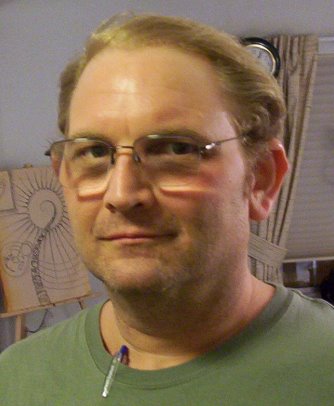
Tuesday, October 17, 2006
About Love - Forgiving
What do we do when we hold things in our hearts which we feel badly about? How can we allow anyone to love us if we do not love ourselves? Love has many pitfalls and it is necessary for us to find peace within our hearts and to find love for ourselves before we can love anyone else or feel secure in regard to the love others have for us.
When we hold things in our hearts for which we feel shame or anger or pain or resentment or any other negative feelings we find it difficult to love ourselves. Indeed, many of us come to hate ourselves with a passion and we may set about to destroy ourselves either deliberately or through neglect or by sub-conscious self sabotage. We may feel great despair that no one should love us because of the dark issues in our hearts, and we will very often convince ourselves that no one can ever truly love us because of our poor regard for ourselves.
In this state, because we feel we are un-loveable we will tend to perceive the love others have for ourselves as selfish and riddled with ulterior motives even if that love is pure and selfless; in this manner we spoil the gift of love that others may try to share with us thereby doing both ourselves and those who love us great injustice.
While many of us do not reach such an extreme and deliberately self destructive state in regard to ourselves and the dark places in our hearts, most of us are afflicted by some darkness in our hearts and we sub-consciously undermine our lives in our efforts to punish ourselves for whatever dark things we keep deep in our hearts. That part of our lives which receives the most damage from our self loathing and sabotage is our relationships to the people we most love or desire.
We must find it within our capacity to forgive ourselves for anything in our hearts which we have done which has hurt us or which has hurt someone else. It is not necessary for us to ever seek any forgiveness from anyone else. We do not need to seek forgiveness from others we have hurt because they may be unprepared to forgive us even though it will always be in their best interest to do so.
By seeking forgiveness from others we are doing ourselves harm. We have disempowered ourselves from being able to heal ourselves when we require others to forgive us. The one we most need to be forgiven by is our self. By forgiving ourselves of any hurt we may have caused to others or to ourselves we empower ourselves to love ourselves and to heal.
While we need no one else to forgive us it is still important that we forgive all others whom we may feel have ever hurt us in any way.
Forgiving others is like seeking to be forgiven, it is not necessary to seek out those whom you wish to forgive. However, if an opportunity ever arises to speak kind words of forgiveness to someone who has hurt you then you should regard that moment is a golden opportunity to help yourself and to help that other person so that you may both heal and become happier human beings. It is always a good idea to act in that moment and to immediately create new healing.
Forgiveness is a wonderful blessing. It can be easy to give and yet it enriches our lives immensely. However, when we find it difficult to forgive ourselves or anyone else then the sores in our hearts can fester and these sores will slowly poison us day by day making our lives darker and leading us into greater misery, pain and despair all of which may often be unnecessary.
We create this pain and misery for ourselves as a signal to pay attention and to immediately take the appropriate action to heal ourselves by forgiving. But if we choose to neglect the roots of our pain and misery we will be unable to address the issues in our lives which linger on unresolved, and which will then continue to harm us. The choice to forgive is ours to make and we can prevent much pain and misery in our lives by choosing to forgive anything and everything which may happen to us the very instant it occurs.
Just as we will reflexively pull our hand away from a fire if we accidentally put our hand too close to a hot fire, so too we should reflexively forgive any harm which is done to us or which we may have done to ourselves. Failure to quickly forgive anything which happens to us which may seem to have harmed us is as dangerous to our wellbeing as is leaving our hand too near to a hot fire.
Forgiveness is all about love. If we wish others to love us we will be unable to accept their love so long as anything in our hearts remains un-forgiven. When we have opened our hearts and forgiven everyone, including ourselves for everything that has ever hurt us we are able to receive love without doubts about our worthiness interfering with the love we are meant to receive; doubting the love we receive can only ever cause us more pain.
When every hurt in our hearts has been forgiven then we become free to love everyone around us more effulgently, thereby gracing all of our lives with our joy, our happiness and our warm regards for everyone. In this state where everything is forgiven we are prepared to love and to be loved in a manner that can only bring us even greater joy and happiness.
BIO:
Fledgling author Greg Gourdian has worked with the general public as a psychic reader for a little over four years from 1981 to 1986. Much of his written work is channeled, although he will admit that he has no idea who many of the sources for his channeled work may be. He has many strange tales to tell regarding his spiritual journey and he attempts to tell his tales in a humorous or entertaining manner. While not an accredited teacher, Greg has taught classes in psychology, sociology, metaphysics and parapsychology.
Visit Greg's blog at http://tangledintime.blogspot.com/
When we hold things in our hearts for which we feel shame or anger or pain or resentment or any other negative feelings we find it difficult to love ourselves. Indeed, many of us come to hate ourselves with a passion and we may set about to destroy ourselves either deliberately or through neglect or by sub-conscious self sabotage. We may feel great despair that no one should love us because of the dark issues in our hearts, and we will very often convince ourselves that no one can ever truly love us because of our poor regard for ourselves.
In this state, because we feel we are un-loveable we will tend to perceive the love others have for ourselves as selfish and riddled with ulterior motives even if that love is pure and selfless; in this manner we spoil the gift of love that others may try to share with us thereby doing both ourselves and those who love us great injustice.
While many of us do not reach such an extreme and deliberately self destructive state in regard to ourselves and the dark places in our hearts, most of us are afflicted by some darkness in our hearts and we sub-consciously undermine our lives in our efforts to punish ourselves for whatever dark things we keep deep in our hearts. That part of our lives which receives the most damage from our self loathing and sabotage is our relationships to the people we most love or desire.
We must find it within our capacity to forgive ourselves for anything in our hearts which we have done which has hurt us or which has hurt someone else. It is not necessary for us to ever seek any forgiveness from anyone else. We do not need to seek forgiveness from others we have hurt because they may be unprepared to forgive us even though it will always be in their best interest to do so.
By seeking forgiveness from others we are doing ourselves harm. We have disempowered ourselves from being able to heal ourselves when we require others to forgive us. The one we most need to be forgiven by is our self. By forgiving ourselves of any hurt we may have caused to others or to ourselves we empower ourselves to love ourselves and to heal.
While we need no one else to forgive us it is still important that we forgive all others whom we may feel have ever hurt us in any way.
Forgiving others is like seeking to be forgiven, it is not necessary to seek out those whom you wish to forgive. However, if an opportunity ever arises to speak kind words of forgiveness to someone who has hurt you then you should regard that moment is a golden opportunity to help yourself and to help that other person so that you may both heal and become happier human beings. It is always a good idea to act in that moment and to immediately create new healing.
Forgiveness is a wonderful blessing. It can be easy to give and yet it enriches our lives immensely. However, when we find it difficult to forgive ourselves or anyone else then the sores in our hearts can fester and these sores will slowly poison us day by day making our lives darker and leading us into greater misery, pain and despair all of which may often be unnecessary.
We create this pain and misery for ourselves as a signal to pay attention and to immediately take the appropriate action to heal ourselves by forgiving. But if we choose to neglect the roots of our pain and misery we will be unable to address the issues in our lives which linger on unresolved, and which will then continue to harm us. The choice to forgive is ours to make and we can prevent much pain and misery in our lives by choosing to forgive anything and everything which may happen to us the very instant it occurs.
Just as we will reflexively pull our hand away from a fire if we accidentally put our hand too close to a hot fire, so too we should reflexively forgive any harm which is done to us or which we may have done to ourselves. Failure to quickly forgive anything which happens to us which may seem to have harmed us is as dangerous to our wellbeing as is leaving our hand too near to a hot fire.
Forgiveness is all about love. If we wish others to love us we will be unable to accept their love so long as anything in our hearts remains un-forgiven. When we have opened our hearts and forgiven everyone, including ourselves for everything that has ever hurt us we are able to receive love without doubts about our worthiness interfering with the love we are meant to receive; doubting the love we receive can only ever cause us more pain.
When every hurt in our hearts has been forgiven then we become free to love everyone around us more effulgently, thereby gracing all of our lives with our joy, our happiness and our warm regards for everyone. In this state where everything is forgiven we are prepared to love and to be loved in a manner that can only bring us even greater joy and happiness.
BIO:
Fledgling author Greg Gourdian has worked with the general public as a psychic reader for a little over four years from 1981 to 1986. Much of his written work is channeled, although he will admit that he has no idea who many of the sources for his channeled work may be. He has many strange tales to tell regarding his spiritual journey and he attempts to tell his tales in a humorous or entertaining manner. While not an accredited teacher, Greg has taught classes in psychology, sociology, metaphysics and parapsychology.
Visit Greg's blog at http://tangledintime.blogspot.com/
Thursday, October 12, 2006
About Love – Conflict
About Love – Conflict
However much we may love someone we may sometimes find ourselves in serious conflict with them. One of the most common areas of conflict is over money. Both partners must be willing to make sacrifices in how they spend money to try to make things work. When only one partner makes sacrifices things are heading toward a break up.
Partners in a relationship must sacrifice themselves for the good of their relationship, but too much sacrifice will do more harm than good, particularly when each of us sees ourselves as having sacrificed more than our partner has.
There are many things we may sacrifice. Our time or money or our preferences regarding everything from our friends or how we dress to what we eat or what entertainment we may most enjoy or even more things may need to be sacrificed. If we fail to make some of these sacrifices our partners may feel unloved. If we make too many of these sacrifices we may resent our partners for seeming to require too much of us.
Both partners may feel they sacrifice too much and both may be correct. One partner may feel that they give up too much time or freedom while the other partner may feel they give up too much of their comfort or security.
Both complaints may be valid and need to be considered fairly. Sometimes there is an effort to ‘trade off’ but most of these things are like apples and oranges and it is hard to see the relative value of each in terms of the other or to know what a fair compromise may really be. Too often both partners continue to feel they are getting the short end of the deal no matter how much each feels they sacrifice for the other.
In response to feeling we may be getting less than our partner, one partner or both partners may go out and lavish rewards upon themselves spending a small fortune on what each desires perhaps without rational concern for the consequences. If we allow this sort of behavior to get out of hand we may find ourselves descending into unmanageable debt.
Perhaps the fastest way to resolve conflicts regarding what we feel we sacrifice for one another may be to strip everything down to the bare minimum, the absolute bare minimum.
One thing which should be reduced is our egoistic concerns for the quality or expense of our clothes. Wear what is appropriate to work but no more. Choose generic goods not designer labels. Off the rack, not custom tailored. Enough outfits for a single week and not a month. This does not mean that we must continue to reduce ourselves to this minimum standard indefinitely; it is only one of many things we can do to reach a starting point for a fair and equitable lifestyle that balances our own needs with the needs of our partner.
It will also be appropriate to give up some entertainment. A few books which we resell or trade, or some movie rentals may be ok but ‘collecting’ such things for the pleasure of owning them may need to be put on hold for awhile. Going to concerts or sporting events where there is no mutual interest or time to go together may need to be forsaken for a while as well. Keep in touch with music online or on the radio, keep up with sports teams in news reports from papers or on television. Both partners must reduce the time and money invested in these side interests to a bare minimum to reach a fair bargaining point where some of these activities may later be reintroduced through careful bargaining.
Plan meals together and trade off preparing simple favorite meals. Keep the effort and the expense of meal preparations to a reasonable minimum. We should temporarily give up any snacks or treats that are our selfish pleasures, particularly those which may put us at risk with regard to our health. Putting our health at risk is a sure fire way to say to our partner that we do not care either for ourselves or for them. We should eat basic and nourishing foods for awhile rather than a diet rich in our favorite indulgences. Again, some of these things may be reintroduced later, but not right away.
Another area where we may need to reduce our lifestyles to a minimum standard may be in regard to the time we spend with our personal friends outside of work or our home. Our friends can be wonderful resources for us, but if too much of our lives are consumed by our other relationships we may be bankrupting the one relationship which matters most.
In this manner, wherever there is time or money expended outside of the primary relationship we have with our partner those things should be curtailed. The practical goal of achieving a minimalized lifestyle is two-fold:
One part of the goal is to put ourselves in a situation where we have more time to spend with our partner so that we may talk or play together more often.
The other part of our goal is to develop a lifestyle where our budget is no longer strained and we can actually begin to save money rather than going into debt. Our debt must be resolved or we must develop a lifestyle which makes it possible to resolve our debt within our means.
Once we each have more time to invest with our partners there will be less jealousy about what each partner sacrifices because it is our time together which should mean more than anything else to both partners.
When we can learn to manage our debt successfully we may then slowly begin to reintroduce some special things which we desire if they are within our means to do so without either taking too much of our time away from our partner or seriously hampering our recovery from debt. We must think twice about everything we want, once for ourselves, and once to include what we will be giving our partner in the bargain we need to make to get what we desire.
We need to discuss with our partners any changes we wish to make to reintroduce some of the special things which we have given up and we must agree on which things each of us will be allowed to have in advance. We must seek a fair balance in what we choose for ourselves and in what we agree our partners may have so that both of us are in agreement about the equitability of our choices and the impact our choices will have on our budget and on the amount and quality of the time which we make available to our partner to be spent together.
From a minimalist standard of living many things which we may find both rewarding and fulfilling may be added back into our lifestyles at very little cost in either time or money. But with opulent lifestyles burdened by debt every pleasure we seek has a hidden consequence within our consciences that makes us feel guilty and defensive. Our guilt and defensiveness become hostility; we may then use these negative emotions to justify our self destructive or relationship destructive behavior thereby possibly exacerbating our opulent lifestyles and further undermining the amount and quality of time we may spend with our partners or adding to the burden of our debt.
Where conflict arises we must quell it through mutual and total self sacrifice; from there we may begin to learn anew how best to find those pleasures and rewards in our lives which most enhance not only our own health, joy and happiness but which also enhances the quality of the time and joy which we may share with our partner.
Note: In homes with children or other dependents it is best to include everyone in this process; give fair consideration to each person’s minimal needs and include them in the fair bargaining process to increase each person’s share of the mutual wealth of time and resources that are collectively owned by all of the members of the home.
BIO:
Fledgling author Greg Gourdian has worked with the general public as a psychic reader for a little over four years from 1981 to 1986. Much of his written work is channeled, although he will admit that he has no idea who many of the sources for his channeled work may be. He has many strange tales to tell regarding his spiritual journey and he attempts to tell his tales in a humorous or entertaining manner. While not an accredited teacher, Greg has taught classes in psychology, sociology, metaphysics and parapsychology.
However much we may love someone we may sometimes find ourselves in serious conflict with them. One of the most common areas of conflict is over money. Both partners must be willing to make sacrifices in how they spend money to try to make things work. When only one partner makes sacrifices things are heading toward a break up.
Partners in a relationship must sacrifice themselves for the good of their relationship, but too much sacrifice will do more harm than good, particularly when each of us sees ourselves as having sacrificed more than our partner has.
There are many things we may sacrifice. Our time or money or our preferences regarding everything from our friends or how we dress to what we eat or what entertainment we may most enjoy or even more things may need to be sacrificed. If we fail to make some of these sacrifices our partners may feel unloved. If we make too many of these sacrifices we may resent our partners for seeming to require too much of us.
Both partners may feel they sacrifice too much and both may be correct. One partner may feel that they give up too much time or freedom while the other partner may feel they give up too much of their comfort or security.
Both complaints may be valid and need to be considered fairly. Sometimes there is an effort to ‘trade off’ but most of these things are like apples and oranges and it is hard to see the relative value of each in terms of the other or to know what a fair compromise may really be. Too often both partners continue to feel they are getting the short end of the deal no matter how much each feels they sacrifice for the other.
In response to feeling we may be getting less than our partner, one partner or both partners may go out and lavish rewards upon themselves spending a small fortune on what each desires perhaps without rational concern for the consequences. If we allow this sort of behavior to get out of hand we may find ourselves descending into unmanageable debt.
Perhaps the fastest way to resolve conflicts regarding what we feel we sacrifice for one another may be to strip everything down to the bare minimum, the absolute bare minimum.
One thing which should be reduced is our egoistic concerns for the quality or expense of our clothes. Wear what is appropriate to work but no more. Choose generic goods not designer labels. Off the rack, not custom tailored. Enough outfits for a single week and not a month. This does not mean that we must continue to reduce ourselves to this minimum standard indefinitely; it is only one of many things we can do to reach a starting point for a fair and equitable lifestyle that balances our own needs with the needs of our partner.
It will also be appropriate to give up some entertainment. A few books which we resell or trade, or some movie rentals may be ok but ‘collecting’ such things for the pleasure of owning them may need to be put on hold for awhile. Going to concerts or sporting events where there is no mutual interest or time to go together may need to be forsaken for a while as well. Keep in touch with music online or on the radio, keep up with sports teams in news reports from papers or on television. Both partners must reduce the time and money invested in these side interests to a bare minimum to reach a fair bargaining point where some of these activities may later be reintroduced through careful bargaining.
Plan meals together and trade off preparing simple favorite meals. Keep the effort and the expense of meal preparations to a reasonable minimum. We should temporarily give up any snacks or treats that are our selfish pleasures, particularly those which may put us at risk with regard to our health. Putting our health at risk is a sure fire way to say to our partner that we do not care either for ourselves or for them. We should eat basic and nourishing foods for awhile rather than a diet rich in our favorite indulgences. Again, some of these things may be reintroduced later, but not right away.
Another area where we may need to reduce our lifestyles to a minimum standard may be in regard to the time we spend with our personal friends outside of work or our home. Our friends can be wonderful resources for us, but if too much of our lives are consumed by our other relationships we may be bankrupting the one relationship which matters most.
In this manner, wherever there is time or money expended outside of the primary relationship we have with our partner those things should be curtailed. The practical goal of achieving a minimalized lifestyle is two-fold:
One part of the goal is to put ourselves in a situation where we have more time to spend with our partner so that we may talk or play together more often.
The other part of our goal is to develop a lifestyle where our budget is no longer strained and we can actually begin to save money rather than going into debt. Our debt must be resolved or we must develop a lifestyle which makes it possible to resolve our debt within our means.
Once we each have more time to invest with our partners there will be less jealousy about what each partner sacrifices because it is our time together which should mean more than anything else to both partners.
When we can learn to manage our debt successfully we may then slowly begin to reintroduce some special things which we desire if they are within our means to do so without either taking too much of our time away from our partner or seriously hampering our recovery from debt. We must think twice about everything we want, once for ourselves, and once to include what we will be giving our partner in the bargain we need to make to get what we desire.
We need to discuss with our partners any changes we wish to make to reintroduce some of the special things which we have given up and we must agree on which things each of us will be allowed to have in advance. We must seek a fair balance in what we choose for ourselves and in what we agree our partners may have so that both of us are in agreement about the equitability of our choices and the impact our choices will have on our budget and on the amount and quality of the time which we make available to our partner to be spent together.
From a minimalist standard of living many things which we may find both rewarding and fulfilling may be added back into our lifestyles at very little cost in either time or money. But with opulent lifestyles burdened by debt every pleasure we seek has a hidden consequence within our consciences that makes us feel guilty and defensive. Our guilt and defensiveness become hostility; we may then use these negative emotions to justify our self destructive or relationship destructive behavior thereby possibly exacerbating our opulent lifestyles and further undermining the amount and quality of time we may spend with our partners or adding to the burden of our debt.
Where conflict arises we must quell it through mutual and total self sacrifice; from there we may begin to learn anew how best to find those pleasures and rewards in our lives which most enhance not only our own health, joy and happiness but which also enhances the quality of the time and joy which we may share with our partner.
Note: In homes with children or other dependents it is best to include everyone in this process; give fair consideration to each person’s minimal needs and include them in the fair bargaining process to increase each person’s share of the mutual wealth of time and resources that are collectively owned by all of the members of the home.
BIO:
Fledgling author Greg Gourdian has worked with the general public as a psychic reader for a little over four years from 1981 to 1986. Much of his written work is channeled, although he will admit that he has no idea who many of the sources for his channeled work may be. He has many strange tales to tell regarding his spiritual journey and he attempts to tell his tales in a humorous or entertaining manner. While not an accredited teacher, Greg has taught classes in psychology, sociology, metaphysics and parapsychology.
Wednesday, October 11, 2006
About Love – Letting Go
CREDITS: New Release, Amanda, Mahla, Kristin, Aurora, Tepet, and several who have passed from life but who returned today to proof this article with me and to cry with joy for the wonder of our love.
About Love – Letting Go
At times we face a terrible moment in our lives when we realize we must lose someone we love. Whether the one we love is leaving us temporarily to go to a new school or job, or we are breaking up from a relationship, or our loved one is dying or has passed on, it is a very hard thing to let go of someone we love and to let them go on without us.
Perhaps the most terrible pain we may face in life is to lose someone near and dear to us. It may seem as if the pain of our loss will utterly destroy us. It may seem so terrible that we cannot want to go on living without them. Indeed many people pine away after they lose their lifelong lover and simply will themselves to die, while others take a quicker step through the dark door from life to death.
It is the most horrible thing I know how to feel to be missing someone I have loved, even if they are in the room next door. For once the reality of our separation from someone we have dearly loved appears we may be bereaved to a point of utter desolation.
In whatever manner we become parted from our loved one, whether they most go to seek their fortunes, or are taken away from us by duty, whether they leave us by choice or are taken by death, we may feel painfully alone and inconsolable in our grief. But we must go on. To do anything less than to hold our chins high and meet the new empty day with courage and confidence in ourselves only demeans the truth and beauty of the love we shared with the child, parent, lover or friend whom we are missing.
Whether our loved one stands on the other side of life’s dark doorway into the beyond that we fear as death, or whether they only stand in the next room away from us, a deep part of those whom we love will always love us in return and be concerned for us and want us to go on and to be happy. Our love is an eternal thing; it exists outside of time and space and fills the universe with its joy from end to end in the moment it first blossoms in our hearts. We ephemerally limited beings often fail to see this truth because we live for the moment and as soon as the connection to the presence of our love has waned we begin to feel the painful separation of it and want to go back to that moment or move on quickly to the next moment when we are once more in the arms of one whom we love and can again feel the joy of our love overwhelm us with its sweet comfort.
Love is so far beyond all other joys in life that our entire lives may seem to be eclipsed in the moment we lose someone we dearly love. What would be the worth and joy of love if this were not so? Love is valued beyond measure, it is so infinite in regard to the depths it penetrates us to reach our soul. Love is a liberating force that frees us from fear and pain and worry and loss. Love is an uplifting force that motivates us to strive to be our very best. Love is a binding force that knits us warmly to our family, friends, communities and world. But love does not complete us or make us whole.
We must be complete and whole and we must fully and unconditionally love ourselves to be able to fully accept and experience the love that is shared between two people. Love may complement us so that two people with different strengths are stronger together than they could be individually. Love may balance us so that where we are timid or overly brave our loved one may show us a different way to be that can help us to live happier healthier lives. Love makes so much more of us than we may be aware of in ourselves because it brings the fresh perspective of another person’s perceptions of ourselves to us to teach us truths about ourselves that we were missing or could not see or understand.
So when we face the terrible moment when we lose someone we dearly love we seem to lose so much more than just the person we love, we seem to lose parts of ourselves as well. Our grief goes beyond the outward loss of the person we love and encompasses an inner loss of ourselves, the loss of parts of us that blossomed in the gifted sight of our loved one’s eyes.
There seems so much to lose when we are parted from someone we dearly love, but all the loss is an illusion. We have been given so much in the sharing of our love with one another that we are forever made richer by the gifts of our love. While we cannot live eternally in the past to remain in the presence and effulgence of the love of someone we are missing, many of us do try to do just that. It is a natural response to hold onto our attachments to someone we love after they are gone, whether they will be gone only minutes or forever.
Holding onto our loved one through these strong attachments forged in the hot passion of our love is a dangerous thing that puts our lives at risk. Attachments to any part of the past may draw us away from living in the present moment and diminish our capacity to experience joy and happiness and love here and now. We may so divorce ourselves from our lives in the present moment that we become despondent or physically ill as a consequence because by holding onto these attachments we are neglecting ourselves and neglecting our lives, failing to care for ourselves adequately or to experience life fully with all the passion we have within us.
Again, this only demeans the gift of the love we have shared with the person whom we miss. Even if deeply estranged from us or miserably angry with us, deep in the hearts of our missing loved ones, where love always remains real and present, our loved ones would never want us to fail to live to the fullest depths of our capacity to experience joy and happiness and love.
So we must let go. Whether we are letting go for only minutes, hours, days, or eternity, we must simply let go of all of our attachments to anyone we love. When we release ourselves from those attachments, whether in a healthy relationship, or in a relationship that has failed, or in circumstances in which we simply cannot remain together in our lives, we are actually enabling ourselves to experience the love we believe we are missing. We can never go back to the past to find our love for it is always in the present. When we release ourselves from our attachments to those we love we enable ourselves to experience the effulgence of our love completely without hesitation or reservation so that our lives once more are sweeter and full of comfort and joy.
So let go to let in the love that is real. Accept today for what it is, an opportunity to find everything you may seek in life and to love and be loved by everyone you meet. And who knows? With your head held up and your eyes wide open someone very special may appear that you may otherwise have missed. So let go to let love return to your heart. Just let go.
I know this may sound difficult to do but it is really not so hard to do. When you feel the love that is an attachment it always leads to a moment in the past where the pain of separation still dwells. Learn to anticipate that pain and to move away from it before it can return to you. You move away from it by engaging the real world around you in whatever way it most urgently needs to be addressed, whether it is chores or exercise or adventuring, when you let go your life moves on and you make your life richer now.
BIO:
Fledgling author Greg Gourdian has worked with the general public as a psychic reader for a little over four years from 1981 to 1986. Much of his written work is channeled, although he will admit that he has no idea who many of the sources for his channeled work may be. He has many strange tales to tell regarding his spiritual journey and he attempts to tell his tales in a humorous or entertaining manner. While not an accredited teacher, Greg has taught classes in psychology, sociology, metaphysics and parapsychology.
About Love – Letting Go
At times we face a terrible moment in our lives when we realize we must lose someone we love. Whether the one we love is leaving us temporarily to go to a new school or job, or we are breaking up from a relationship, or our loved one is dying or has passed on, it is a very hard thing to let go of someone we love and to let them go on without us.
Perhaps the most terrible pain we may face in life is to lose someone near and dear to us. It may seem as if the pain of our loss will utterly destroy us. It may seem so terrible that we cannot want to go on living without them. Indeed many people pine away after they lose their lifelong lover and simply will themselves to die, while others take a quicker step through the dark door from life to death.
It is the most horrible thing I know how to feel to be missing someone I have loved, even if they are in the room next door. For once the reality of our separation from someone we have dearly loved appears we may be bereaved to a point of utter desolation.
In whatever manner we become parted from our loved one, whether they most go to seek their fortunes, or are taken away from us by duty, whether they leave us by choice or are taken by death, we may feel painfully alone and inconsolable in our grief. But we must go on. To do anything less than to hold our chins high and meet the new empty day with courage and confidence in ourselves only demeans the truth and beauty of the love we shared with the child, parent, lover or friend whom we are missing.
Whether our loved one stands on the other side of life’s dark doorway into the beyond that we fear as death, or whether they only stand in the next room away from us, a deep part of those whom we love will always love us in return and be concerned for us and want us to go on and to be happy. Our love is an eternal thing; it exists outside of time and space and fills the universe with its joy from end to end in the moment it first blossoms in our hearts. We ephemerally limited beings often fail to see this truth because we live for the moment and as soon as the connection to the presence of our love has waned we begin to feel the painful separation of it and want to go back to that moment or move on quickly to the next moment when we are once more in the arms of one whom we love and can again feel the joy of our love overwhelm us with its sweet comfort.
Love is so far beyond all other joys in life that our entire lives may seem to be eclipsed in the moment we lose someone we dearly love. What would be the worth and joy of love if this were not so? Love is valued beyond measure, it is so infinite in regard to the depths it penetrates us to reach our soul. Love is a liberating force that frees us from fear and pain and worry and loss. Love is an uplifting force that motivates us to strive to be our very best. Love is a binding force that knits us warmly to our family, friends, communities and world. But love does not complete us or make us whole.
We must be complete and whole and we must fully and unconditionally love ourselves to be able to fully accept and experience the love that is shared between two people. Love may complement us so that two people with different strengths are stronger together than they could be individually. Love may balance us so that where we are timid or overly brave our loved one may show us a different way to be that can help us to live happier healthier lives. Love makes so much more of us than we may be aware of in ourselves because it brings the fresh perspective of another person’s perceptions of ourselves to us to teach us truths about ourselves that we were missing or could not see or understand.
So when we face the terrible moment when we lose someone we dearly love we seem to lose so much more than just the person we love, we seem to lose parts of ourselves as well. Our grief goes beyond the outward loss of the person we love and encompasses an inner loss of ourselves, the loss of parts of us that blossomed in the gifted sight of our loved one’s eyes.
There seems so much to lose when we are parted from someone we dearly love, but all the loss is an illusion. We have been given so much in the sharing of our love with one another that we are forever made richer by the gifts of our love. While we cannot live eternally in the past to remain in the presence and effulgence of the love of someone we are missing, many of us do try to do just that. It is a natural response to hold onto our attachments to someone we love after they are gone, whether they will be gone only minutes or forever.
Holding onto our loved one through these strong attachments forged in the hot passion of our love is a dangerous thing that puts our lives at risk. Attachments to any part of the past may draw us away from living in the present moment and diminish our capacity to experience joy and happiness and love here and now. We may so divorce ourselves from our lives in the present moment that we become despondent or physically ill as a consequence because by holding onto these attachments we are neglecting ourselves and neglecting our lives, failing to care for ourselves adequately or to experience life fully with all the passion we have within us.
Again, this only demeans the gift of the love we have shared with the person whom we miss. Even if deeply estranged from us or miserably angry with us, deep in the hearts of our missing loved ones, where love always remains real and present, our loved ones would never want us to fail to live to the fullest depths of our capacity to experience joy and happiness and love.
So we must let go. Whether we are letting go for only minutes, hours, days, or eternity, we must simply let go of all of our attachments to anyone we love. When we release ourselves from those attachments, whether in a healthy relationship, or in a relationship that has failed, or in circumstances in which we simply cannot remain together in our lives, we are actually enabling ourselves to experience the love we believe we are missing. We can never go back to the past to find our love for it is always in the present. When we release ourselves from our attachments to those we love we enable ourselves to experience the effulgence of our love completely without hesitation or reservation so that our lives once more are sweeter and full of comfort and joy.
So let go to let in the love that is real. Accept today for what it is, an opportunity to find everything you may seek in life and to love and be loved by everyone you meet. And who knows? With your head held up and your eyes wide open someone very special may appear that you may otherwise have missed. So let go to let love return to your heart. Just let go.
I know this may sound difficult to do but it is really not so hard to do. When you feel the love that is an attachment it always leads to a moment in the past where the pain of separation still dwells. Learn to anticipate that pain and to move away from it before it can return to you. You move away from it by engaging the real world around you in whatever way it most urgently needs to be addressed, whether it is chores or exercise or adventuring, when you let go your life moves on and you make your life richer now.
BIO:
Fledgling author Greg Gourdian has worked with the general public as a psychic reader for a little over four years from 1981 to 1986. Much of his written work is channeled, although he will admit that he has no idea who many of the sources for his channeled work may be. He has many strange tales to tell regarding his spiritual journey and he attempts to tell his tales in a humorous or entertaining manner. While not an accredited teacher, Greg has taught classes in psychology, sociology, metaphysics and parapsychology.
Monday, October 09, 2006
About Love – Loving Unconditionally
You may be familiar with the term unconditional love, but have you learned to practice this powerful concept? Unconditional love is a transformational gift that empowers us and those whom we love to become the best that we can be. It is fundamental to our happiness and wellbeing to learn how to love ourselves and others unconditionally.
Unconditional love is more than a powerful concept it is has the genuine power to heal both ourselves and people around us. When we love someone unconditionally we accept them with all of their flaws and weaknesses and transform those things within them which may be hard for them to accept into things they may more easily accept and deal with. When we accept ourselves for who we are with all our flaws then we empower ourselves to change and improve ourselves. Unconditional love tells another person that those things within themselves which they find fault with are ok, that they can accept those things about themselves and not feel badly about themselves or punish themselves for those things. And of course, when we love ourselves unconditionally we receive the same message and empower ourselves to grow and become better people.
Unfortunately it is part of the nature of our human condition to use our love as a manipulative tool. We may think we are trying to change something about someone we love for the better by placing conditions on our love, but this simply isn’t true. By making our love for either ourselves or for others conditional we limit our love and effectively say we do not love ourselves or we do not love others in regard to whatever conditions we have defined.
Withdrawing our love from ourselves and from others can only ever harm both the person who feels less loved and the person who limits their love. A person who feels unloved by us may feel less love for themselves by finding fault with themselves for which they then withhold their own love of themselves doing themselves more harm. Or a person who has been denied love based on conditions may resent the limits of the love they have received and become angry or bitter toward someone who otherwise might love them. So conditional love is very harmful, it is not really love at all because it has the power to do so much harm.
We should never place limits or conditions on our love for anyone else, including ourselves. It is an injustice to love anyone, including ourselves, in any conditional manner. We should always look within ourselves and other people for those places where we feel our love may be constrained by any judgment or criticism and let go of that judgment or criticism and accept ourselves and everyone else for who we are now. When we limit our love and predicate the full effulgence of our love on conditions which must first be met we are being selfish and manipulative. Love can never arise from selfish or manipulative behavior it can only be spoiled by these.
It may seem hard to love other people unconditionally. We may feel someone we otherwise might love unconditionally has a particular character trait which we feel is repulsive and we may want them to change that in order to make themselves worthy of our love. That is such a selfish ego game. Who are we to decide for others how they should be? It may be the case that someone who cares for us may discover for themselves what they may want to change about themselves which may make it easier for us to love them but they must do that of their own accord in their own good time and not be pushed to change or be manipulated to change because this pushing manipulative behavior is selfish and aggressive and may cause unpleasant reactions in which the person we feel we might otherwise love resents us and becomes angry with us.
So whenever we come across any limits we may feel in our loving regard for others or for ourselves we should change ourselves in response to those limits and learn to accept and to love in response to such feelings without limits or conditions. Love is not about putting ourselves ahead of everyone else, but when we love someone in a conditional manner that is exactly what we are doing; we are putting what we want ahead of truly loving someone.
We impoverish our lives by the limits which we place on our love. Worse, we impoverish the lives of others whom we should love unconditionally. We cannot afford this sort of poverty of our spirits. It demeans us, making less of us in our own eyes as well as in the eyes of others. Only by embracing ourselves and everyone we meet with our full effulgent and unconditional love can we empower ourselves to love and to heal ourselves and to love and help heal those around us whoever they may be.
We must let go of all of our terms and conditions and judgments and criticism and accept the world as it is and accept everyone in the world as they are. Acceptance is an incredibly powerful fulcrum which enables our love to be a lever that moves the world. We may move the world with our love in every moment, and the world will love us all back the more in return.
When we empower ourselves to be unconditionally loving to everyone we meet, including ourselves we will have never regret it; instead we will make ourselves and everyone we meet happier, healthier more loving human beings.
BIO:
Fledgling author Greg Gourdian has worked with the general public as a psychic reader for a little over four years from 1981 to 1986. Much of his written work is channeled, although he will admit that he has no idea who many of the sources for his channeled work may be. He has many strange tales to tell regarding his spiritual journey and he attempts to tell his tales in a humorous or entertaining manner. While not an accredited teacher, Greg has taught classes in psychology, sociology, metaphysics and parapsychology.
Unconditional love is more than a powerful concept it is has the genuine power to heal both ourselves and people around us. When we love someone unconditionally we accept them with all of their flaws and weaknesses and transform those things within them which may be hard for them to accept into things they may more easily accept and deal with. When we accept ourselves for who we are with all our flaws then we empower ourselves to change and improve ourselves. Unconditional love tells another person that those things within themselves which they find fault with are ok, that they can accept those things about themselves and not feel badly about themselves or punish themselves for those things. And of course, when we love ourselves unconditionally we receive the same message and empower ourselves to grow and become better people.
Unfortunately it is part of the nature of our human condition to use our love as a manipulative tool. We may think we are trying to change something about someone we love for the better by placing conditions on our love, but this simply isn’t true. By making our love for either ourselves or for others conditional we limit our love and effectively say we do not love ourselves or we do not love others in regard to whatever conditions we have defined.
Withdrawing our love from ourselves and from others can only ever harm both the person who feels less loved and the person who limits their love. A person who feels unloved by us may feel less love for themselves by finding fault with themselves for which they then withhold their own love of themselves doing themselves more harm. Or a person who has been denied love based on conditions may resent the limits of the love they have received and become angry or bitter toward someone who otherwise might love them. So conditional love is very harmful, it is not really love at all because it has the power to do so much harm.
We should never place limits or conditions on our love for anyone else, including ourselves. It is an injustice to love anyone, including ourselves, in any conditional manner. We should always look within ourselves and other people for those places where we feel our love may be constrained by any judgment or criticism and let go of that judgment or criticism and accept ourselves and everyone else for who we are now. When we limit our love and predicate the full effulgence of our love on conditions which must first be met we are being selfish and manipulative. Love can never arise from selfish or manipulative behavior it can only be spoiled by these.
It may seem hard to love other people unconditionally. We may feel someone we otherwise might love unconditionally has a particular character trait which we feel is repulsive and we may want them to change that in order to make themselves worthy of our love. That is such a selfish ego game. Who are we to decide for others how they should be? It may be the case that someone who cares for us may discover for themselves what they may want to change about themselves which may make it easier for us to love them but they must do that of their own accord in their own good time and not be pushed to change or be manipulated to change because this pushing manipulative behavior is selfish and aggressive and may cause unpleasant reactions in which the person we feel we might otherwise love resents us and becomes angry with us.
So whenever we come across any limits we may feel in our loving regard for others or for ourselves we should change ourselves in response to those limits and learn to accept and to love in response to such feelings without limits or conditions. Love is not about putting ourselves ahead of everyone else, but when we love someone in a conditional manner that is exactly what we are doing; we are putting what we want ahead of truly loving someone.
We impoverish our lives by the limits which we place on our love. Worse, we impoverish the lives of others whom we should love unconditionally. We cannot afford this sort of poverty of our spirits. It demeans us, making less of us in our own eyes as well as in the eyes of others. Only by embracing ourselves and everyone we meet with our full effulgent and unconditional love can we empower ourselves to love and to heal ourselves and to love and help heal those around us whoever they may be.
We must let go of all of our terms and conditions and judgments and criticism and accept the world as it is and accept everyone in the world as they are. Acceptance is an incredibly powerful fulcrum which enables our love to be a lever that moves the world. We may move the world with our love in every moment, and the world will love us all back the more in return.
When we empower ourselves to be unconditionally loving to everyone we meet, including ourselves we will have never regret it; instead we will make ourselves and everyone we meet happier, healthier more loving human beings.
BIO:
Fledgling author Greg Gourdian has worked with the general public as a psychic reader for a little over four years from 1981 to 1986. Much of his written work is channeled, although he will admit that he has no idea who many of the sources for his channeled work may be. He has many strange tales to tell regarding his spiritual journey and he attempts to tell his tales in a humorous or entertaining manner. While not an accredited teacher, Greg has taught classes in psychology, sociology, metaphysics and parapsychology.
Sunday, October 08, 2006
Soul Mates and Twin Spirits – What Are They Really?
Many of us have had a distinctive experience of having met someone for the first time, someone with whom we feel we are incontrovertibly connected deep within our souls. We may believe this new person is our soul mate or our twin soul. But what are our soul mates or twin spirits really? Can we truly be linked to another spirit and destined to meet one another in many different incarnations? Were we somehow made for one another by a divine creator who provides for all of us someone special with whom we may share our lives?
Like many spiritual beliefs, the concepts of twin spirits or soul mates are predicated upon deep spiritual experiences for which there are really no adequate words. We use metaphors to try to describe such experiences until the experiences become so commonplace that new words evolve to more accurately describe our experiences or the metaphors stick like glue and we come to accept the metaphor as a literal description when in fact it may still fall short of being a valid description of our experience.
While it is undeniably true that many of us have experiences in which we recognize another soul with whom we are intimately connected in some inexplicable way, perhaps we should examine the metaphors we use to describe these experiences to shed some light on what may really be going on. Metaphors are used to apply past experiences which we understand to new experiences which we have no proper concepts for. Without clearly understood concepts we can have no words which accurately describe our new experiences which is why we must resort to metaphors. But a metaphor is only an approximate likeness between two experiences which will usually accurately describe our familiar experience but which will provide only a reasonably close ‘as-if’ description of our new experience.
So when we meet someone with whom we feel we share a common past or destiny we search for a way to explain this feeling and our culture has developed the concepts of soul mates and twin spirits to accommodate our need for words to describe how we feel.
The metaphors of soul mates and twin spirits come from our real experiences with having partners in life, our mates, or having known someone with a twin, a biological condition. Both indicate a degree of relatedness that is above and beyond the way we appear to be related to most other people in our lives and that is the essence of what we are trying to express when we find someone with whom we communicate on a very deep level of our souls.
Neither marriage nor twins may have any real meaning in regard to our spirits, so the popular concepts of soul mates and twin spirits may be off the mark in the context of the spiritual reality of our souls. We may have wonderful people in our lives with whom we are deeply connected whom we may have a great affinity for in the context of our spiritual lives beyond the limits of our incarnations, but they may not be our twins or mates, but something other for which we have not yet found adequate words to accurately describe these very special relationships.
Marriage is a societal convention, mates are temporary phenomena, the lives of our souls in the spirit world may have vastly different social conventions and we may have many mates all of whom are special to us each in their own way but none of whom we may be mated to or married to in any sense that is either permanent or exclusive of someone else.
Likewise, this special person with whom we share an incredibly intimate bond may not be related to us in the manner of a twin. Our spirits seem unlikely to have grown from a single egg and our spirits all share the same womb from which they were born so we cannot be twins in the fraternal sense in any manner that may be considered special since in the ultimate sense we must then all be twins to one another including every other spirit in creation.
However, there are considerations which may make the concepts of soul mates and spiritual twins valid metaphors for our experiences of being thoroughly connected with another person’s soul.
Perhaps our souls have somehow divided themselves and our souls have thereby created an independent twin or a soul mate. This is one explanation I can offer which would make soul mates or twin spirits a reasonably valid metaphor for the experience of meeting a very special person. When I examine the beginning of creation at the time our souls are created I do not see any of us in the roles of twins or mates. So if soul mates or twin spirits truly exist then perhaps they must come much later. If they did come later then that would make them a different order of being from what I would call our primary souls; those infinite sparks cast forth in the first moment of creation. Each of our primary souls is like a hologram such that every one of us contains every one of us within ourselves. If we were to become divided and become two separate specially related souls we might then be twin spirits, but we would no longer be the primary soul from which we originally came, even though each of the souls we have become has its origin in a pre-existing undivided state of our soul.
Another possibility would be that twin spirits or soul mates may simply have shared many experiences together over many different incarnations or have always remained close to one another throughout most of their experiences in the spiritual world of our souls.
Soul mates are sometimes described as being paired opposites, however opposites is a weak term to describe this state of connectedness since it appears to preclude areas where two 'soul mates' may be very much alike.
The philosophy of twin spirits or soul mates is most often predicated upon a belief that god provided for every one of us a perfect mate. But then why is finding that perfect mate so difficult? Has god created our perfect mate only to challenge us to find them? I doubt that it is like that, god does not seem perverse to me.
I think we all began in an identical state or condition and that we have then evolved into what we will become. I think the concept of twin spirits or soul mates is too limiting in regard to the potential scope of our love, and that we are meant to love everyone and are not meant to cling to only one special soul throughout eternity.
Of course I may be mistaken, these are only my thoughts of the moment and my position may change as I consider these questions more carefully over time.
One issue I have with the concepts of soul mates and spiritual twins is that they are predicated upon the cognitive process of duality and ultimately duality is an illusion imposed upon us by our limited abilities to think clearly. Again, I may be mistaken, but I do not think that duality applies to who we are as spirits in the most primal sense of our being. Duality appears to be only a tool for picking apart our experiences so that our conscious minds can discover useful terms with which to describe our experiences.
Regardless of the validity of the metaphors we use to describe the sweet experiences we have of meeting someone with whom we may feel we have shared eternity, many of us most definitely connect in a very unique and intimate manner with some very special person in our lives. Thos people with whom we click in this extraordinary manner often become pivotal people in transforming our lives for the better so that we help one another to grow and to evolve as more loving, nurturing and compassionate human beings.
If you are lucky enough to believe you have found your soul mate or a spiritual twin you then should go for broke. The person whom you have found may indeed reflect that belief in your deep union and prove to be a loving partner or a deeply cherished friend well worth knowing and loving and keeping close to you in your present incarnation on earth.
BIO:
Fledgling author Greg Gourdian has worked with the general public as a psychic reader for a little over four years from 1981 to 1986. Much of his written work is channeled, although he will admit that he has no idea who many of the sources for his channeled work may be. He has many strange tales to tell regarding his spiritual journey and he attempts to tell his tales in a humorous or entertaining manner. While not an accredited teacher, Greg has taught classes in psychology, sociology, metaphysics and parapsychology.
Like many spiritual beliefs, the concepts of twin spirits or soul mates are predicated upon deep spiritual experiences for which there are really no adequate words. We use metaphors to try to describe such experiences until the experiences become so commonplace that new words evolve to more accurately describe our experiences or the metaphors stick like glue and we come to accept the metaphor as a literal description when in fact it may still fall short of being a valid description of our experience.
While it is undeniably true that many of us have experiences in which we recognize another soul with whom we are intimately connected in some inexplicable way, perhaps we should examine the metaphors we use to describe these experiences to shed some light on what may really be going on. Metaphors are used to apply past experiences which we understand to new experiences which we have no proper concepts for. Without clearly understood concepts we can have no words which accurately describe our new experiences which is why we must resort to metaphors. But a metaphor is only an approximate likeness between two experiences which will usually accurately describe our familiar experience but which will provide only a reasonably close ‘as-if’ description of our new experience.
So when we meet someone with whom we feel we share a common past or destiny we search for a way to explain this feeling and our culture has developed the concepts of soul mates and twin spirits to accommodate our need for words to describe how we feel.
The metaphors of soul mates and twin spirits come from our real experiences with having partners in life, our mates, or having known someone with a twin, a biological condition. Both indicate a degree of relatedness that is above and beyond the way we appear to be related to most other people in our lives and that is the essence of what we are trying to express when we find someone with whom we communicate on a very deep level of our souls.
Neither marriage nor twins may have any real meaning in regard to our spirits, so the popular concepts of soul mates and twin spirits may be off the mark in the context of the spiritual reality of our souls. We may have wonderful people in our lives with whom we are deeply connected whom we may have a great affinity for in the context of our spiritual lives beyond the limits of our incarnations, but they may not be our twins or mates, but something other for which we have not yet found adequate words to accurately describe these very special relationships.
Marriage is a societal convention, mates are temporary phenomena, the lives of our souls in the spirit world may have vastly different social conventions and we may have many mates all of whom are special to us each in their own way but none of whom we may be mated to or married to in any sense that is either permanent or exclusive of someone else.
Likewise, this special person with whom we share an incredibly intimate bond may not be related to us in the manner of a twin. Our spirits seem unlikely to have grown from a single egg and our spirits all share the same womb from which they were born so we cannot be twins in the fraternal sense in any manner that may be considered special since in the ultimate sense we must then all be twins to one another including every other spirit in creation.
However, there are considerations which may make the concepts of soul mates and spiritual twins valid metaphors for our experiences of being thoroughly connected with another person’s soul.
Perhaps our souls have somehow divided themselves and our souls have thereby created an independent twin or a soul mate. This is one explanation I can offer which would make soul mates or twin spirits a reasonably valid metaphor for the experience of meeting a very special person. When I examine the beginning of creation at the time our souls are created I do not see any of us in the roles of twins or mates. So if soul mates or twin spirits truly exist then perhaps they must come much later. If they did come later then that would make them a different order of being from what I would call our primary souls; those infinite sparks cast forth in the first moment of creation. Each of our primary souls is like a hologram such that every one of us contains every one of us within ourselves. If we were to become divided and become two separate specially related souls we might then be twin spirits, but we would no longer be the primary soul from which we originally came, even though each of the souls we have become has its origin in a pre-existing undivided state of our soul.
Another possibility would be that twin spirits or soul mates may simply have shared many experiences together over many different incarnations or have always remained close to one another throughout most of their experiences in the spiritual world of our souls.
Soul mates are sometimes described as being paired opposites, however opposites is a weak term to describe this state of connectedness since it appears to preclude areas where two 'soul mates' may be very much alike.
The philosophy of twin spirits or soul mates is most often predicated upon a belief that god provided for every one of us a perfect mate. But then why is finding that perfect mate so difficult? Has god created our perfect mate only to challenge us to find them? I doubt that it is like that, god does not seem perverse to me.
I think we all began in an identical state or condition and that we have then evolved into what we will become. I think the concept of twin spirits or soul mates is too limiting in regard to the potential scope of our love, and that we are meant to love everyone and are not meant to cling to only one special soul throughout eternity.
Of course I may be mistaken, these are only my thoughts of the moment and my position may change as I consider these questions more carefully over time.
One issue I have with the concepts of soul mates and spiritual twins is that they are predicated upon the cognitive process of duality and ultimately duality is an illusion imposed upon us by our limited abilities to think clearly. Again, I may be mistaken, but I do not think that duality applies to who we are as spirits in the most primal sense of our being. Duality appears to be only a tool for picking apart our experiences so that our conscious minds can discover useful terms with which to describe our experiences.
Regardless of the validity of the metaphors we use to describe the sweet experiences we have of meeting someone with whom we may feel we have shared eternity, many of us most definitely connect in a very unique and intimate manner with some very special person in our lives. Thos people with whom we click in this extraordinary manner often become pivotal people in transforming our lives for the better so that we help one another to grow and to evolve as more loving, nurturing and compassionate human beings.
If you are lucky enough to believe you have found your soul mate or a spiritual twin you then should go for broke. The person whom you have found may indeed reflect that belief in your deep union and prove to be a loving partner or a deeply cherished friend well worth knowing and loving and keeping close to you in your present incarnation on earth.
BIO:
Fledgling author Greg Gourdian has worked with the general public as a psychic reader for a little over four years from 1981 to 1986. Much of his written work is channeled, although he will admit that he has no idea who many of the sources for his channeled work may be. He has many strange tales to tell regarding his spiritual journey and he attempts to tell his tales in a humorous or entertaining manner. While not an accredited teacher, Greg has taught classes in psychology, sociology, metaphysics and parapsychology.
Subscribe to:
Posts (Atom)